
ROI from lead generation is one of those numbers that looks great on a slide deck and wildly inconsistent everywhere else. Marketing teams report high volumes of leads. Sales teams report that most of them aren’t worth calling. Leadership wants a single cost-per-acquisition number that nobody can agree on. The disconnect is usually not a strategy problem—it’s a measurement problem. Teams tracking lead volume without tracking lead quality, conversion rate, and deal value are optimizing for the wrong metric entirely.
The data on what lead generation actually returns tells a more nuanced story than most benchmarking guides let on. Returns vary dramatically by channel, by industry, and by how well the handoff between marketing and sales is managed. A content-generated lead that took three months of SEO work to acquire can convert at five times the rate of a paid lead that cost a fraction of the time to generate. Or the reverse. The only way to know which channels are actually producing return is to measure them against closed revenue, not just pipeline entries.
This guide covers what the ROI data on lead generation actually shows, where the numbers tend to surprise teams, and which tools help connect lead activity to revenue so the measurement problem gets solved rather than argued about.
What the ROI Data Actually Shows
Lead generation ROI benchmarks are often quoted without the context that makes them useful. Here’s what the data tends to show when you dig into the methodology behind the numbers.
- Content marketing generates leads at a fraction of the cost of paid channels—but over a longer time horizon. Studies comparing inbound and outbound lead costs consistently show inbound leads costing sixty to seventy percent less per acquisition than outbound equivalents. That gap is real, but it reflects average cost over time after content assets have matured, not the cost of content production in the first twelve months. Teams that abandon content strategies before that maturity window closes are paying creation costs without harvesting the lower acquisition cost that follows.
- Email marketing consistently outperforms other channels on direct ROI. Industry benchmarking regularly places email marketing at among the highest return on investment of any digital channel when measured against direct revenue attribution. The performance gap between high-personalization email sequences and broadcast campaigns is significant—segmented campaigns generate substantially higher revenue per recipient than unsegmented sends to the full list.
- Lead quality matters more than lead volume at almost every stage of the funnel. The research on this is consistent: a smaller number of well-qualified leads closes at a higher rate and with shorter sales cycles than a high volume of loosely qualified contacts. Teams that optimize purely for lead quantity without qualification criteria tend to burn out sales teams on leads that were never likely to convert.
- The conversion rate between MQL and SQL is where most ROI calculations break down. Marketing-qualified leads and sales-qualified leads are different things, and companies that don’t define the boundary between them clearly are measuring marketing performance on pipeline entries rather than on revenue contribution. The MQL-to-SQL conversion rate in most B2B organizations sits between twenty and thirty percent, meaning the majority of what marketing reports as leads never enter serious sales consideration.
- Speed-to-response has an outsized effect on lead conversion rates. Research on lead response time shows conversion rates drop dramatically after the first five minutes following a form submission or inquiry. Teams that respond to inbound leads within five minutes convert those leads at significantly higher rates than teams that respond within an hour—and the gap compounds further for responses delayed by a full business day.
Tools That Connect Lead Activity to Measurable ROI
HubSpot — Best for Unified Lead Tracking Across the Funnel
HubSpot connects marketing activity, lead capture, and sales pipeline in a single system, which is the core requirement for measuring lead generation ROI accurately. When the tool that runs your email campaigns is the same tool tracking deal outcomes, attribution doesn’t require manual data assembly across platforms.

The revenue attribution report in HubSpot shows which touchpoints—organic search, paid ads, social, email, direct—contributed to each closed deal, weighted by how you define attribution. Marketing teams can show leadership exactly which campaigns produced revenue, not just which campaigns produced form fills. For lead quality tracking, HubSpot’s lead scoring assigns values to behavior signals so the MQL definition is applied consistently rather than argued about at the end of each quarter.
Salesforce — Best for Enterprise-Level ROI Reporting
Salesforce is the standard for revenue attribution at enterprise scale. The platform connects lead source data from the top of the funnel through to closed-won opportunities, giving revenue operations teams the ability to build attribution models that reflect how deals actually close—often across multiple channels and over months-long sales cycles.
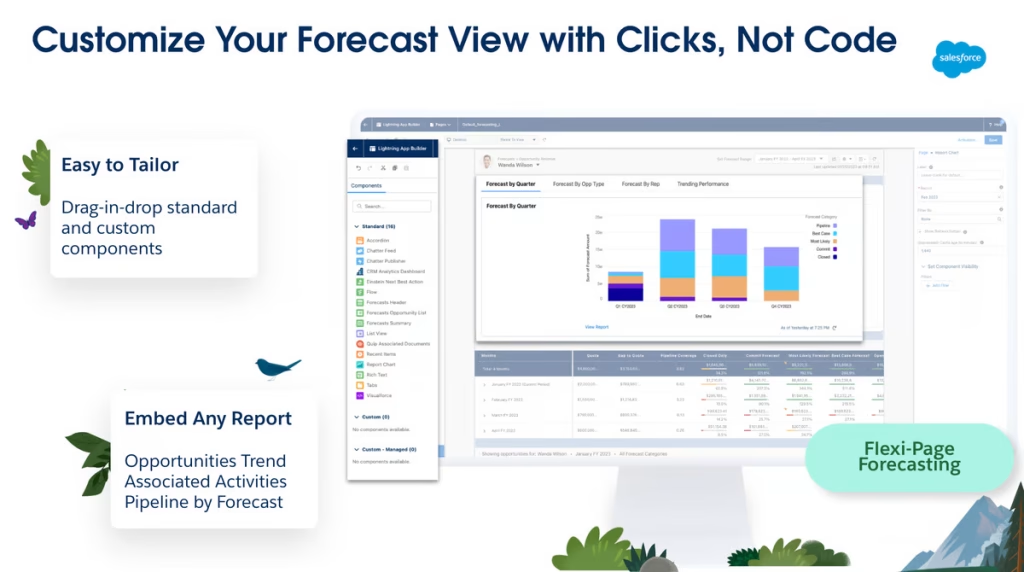
Campaign ROI reporting in Salesforce tracks expected and actual revenue against campaign cost, giving marketing teams a defensible number to bring into budget conversations. For companies where deals take a long time to close and involve multiple stakeholders, Salesforce’s opportunity timeline gives leadership visibility into where each deal is and how lead generation activity contributed to getting it there.
ActiveCampaign — Best for ROI From Email and Marketing Automation
ActiveCampaign shows return on investment from email and automation sequences directly—revenue tied to specific campaigns and automations rather than requiring a separate analytics layer to connect email activity to sales outcomes.
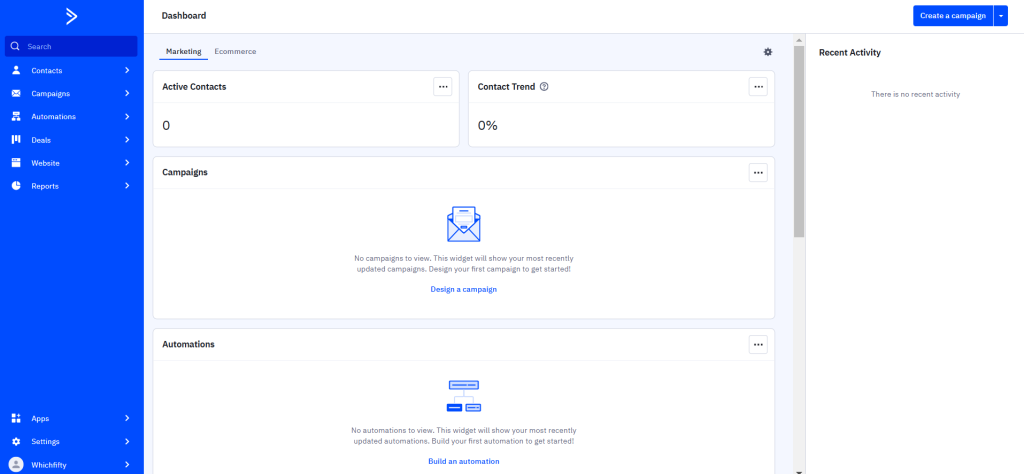
The platform’s lead scoring and CRM combination means contacts can be routed automatically to sales when they hit a qualification threshold, which shortens the MQL-to-SQL gap by reducing the manual review step. For businesses where the email channel is a primary revenue driver, ActiveCampaign’s deal-level revenue tracking gives the attribution data needed to optimize sequences based on which ones actually close business rather than which ones generate clicks.
Pipedrive — Best for Tracking Lead-to-Revenue Conversion in Sales Pipelines
Pipedrive is built around pipeline visibility—how leads move through stages, where they stall, and what conversion rates look like at each step. For sales teams that need to understand which lead sources produce the highest close rates rather than just the highest volume, Pipedrive’s source tracking shows exactly where won deals originated.
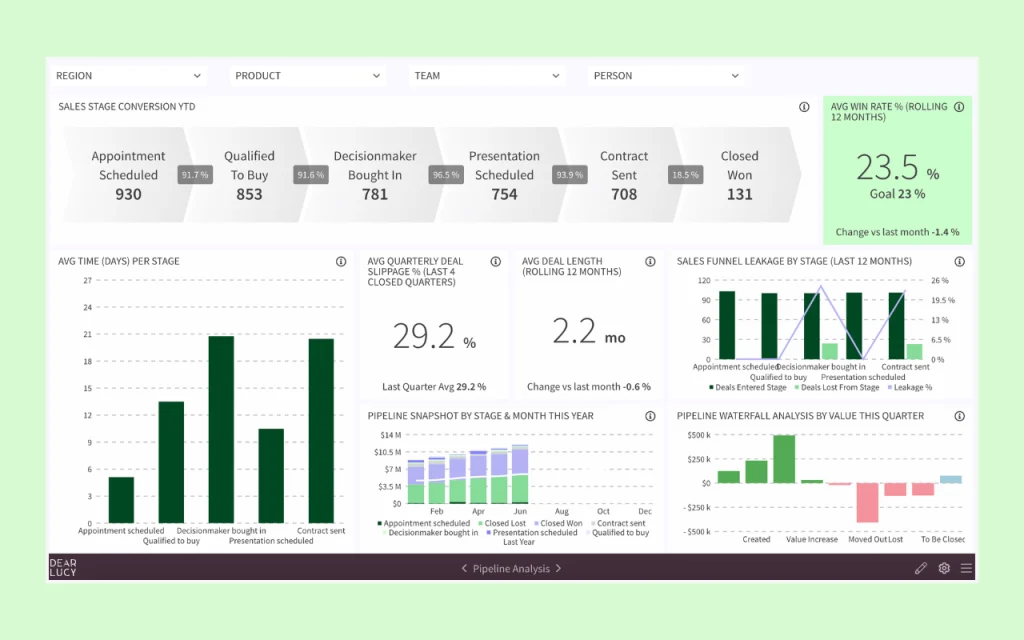
The revenue forecasting feature uses pipeline stage probabilities and deal values to project expected revenue from current leads, which helps teams assess whether the lead generation volume is sufficient to hit targets before the end of the period rather than after it.
Cognism — Best for Outbound Prospecting
Cognism pairs verified emails and direct dials with buyer intent signals, so sales teams know which accounts are actively researching products in their space before making the first call.

When reps focus on accounts showing actual buying activity, cold outreach starts feeling much more like a warm conversation. You spend fewer hours chasing dead leads and more time talking to buyers who are already in the market.
Lusha — Best for Instant Inbound Lead Enrichment
Lusha auto-fills missing phone numbers, direct emails, and company details the moment someone submits a lead form. If your team aims for fast follow-ups—and response time research shows why five minutes matters—Lusha hands your reps clean contact info right away.
Rather than spending ten minutes researching a prospect on LinkedIn before making a call, reps get verified contact data immediately so they can reach inbound leads while the intent is fresh.
Conclusion
Lead generation ROI only becomes a meaningful number when measurement connects all the way from initial contact to closed revenue. Tracking lead volume without tracking lead quality, conversion rate, and deal value produces numbers that feel good to report and don’t help you improve anything.
HubSpot, Salesforce, ActiveCampaign, Pipedrive, Cognism, and Lusha each solve a different part of the attribution and quality problem—from full-funnel revenue tracking to intent-based prospecting to contact enrichment at the moment of capture. The teams that see the strongest lead generation ROI aren’t necessarily running more campaigns. They’re measuring more precisely and routing better-qualified leads to sales faster than the teams they’re competing against.



Leave a Comment