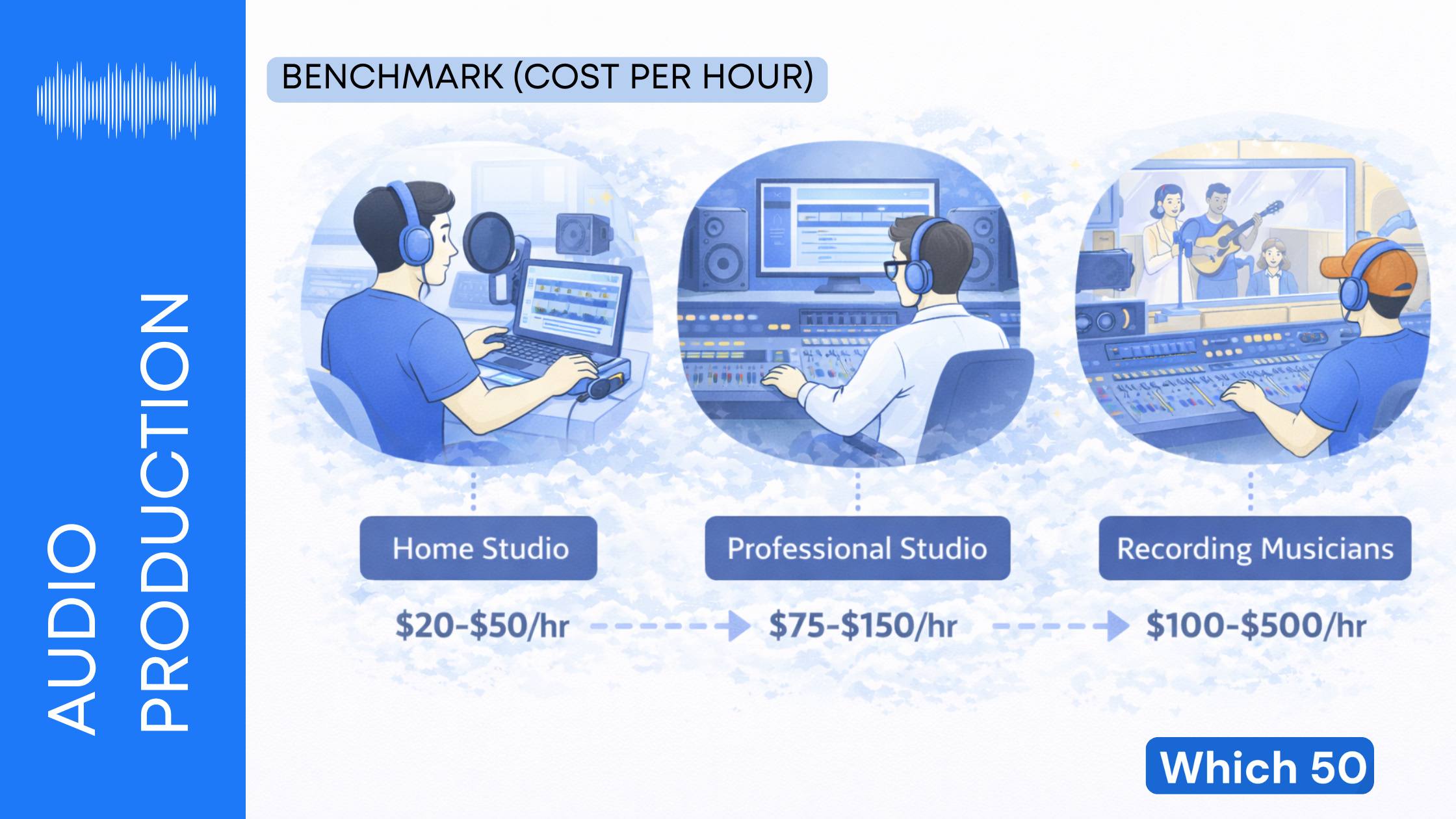
Audio production pricing can feel confusing fast. One person tells you it is $50 an hour. Another quotes $300 an hour. Then someone else says they charge “per finished hour,” which sounds like a totally different language.
If you are budgeting for a podcast, audiobook, ad, YouTube content, music, or post-production for video, this guide will help you get clear. It breaks down real audio production cost per hour benchmarks, what makes rates go up or down, and how to estimate your total project cost without getting surprised later.
You will also learn a simple way to compare quotes, so you can pick the right quality level for your budget, not just the lowest number.
What “Cost Per Hour” Really Means in Audio
Before looking at benchmarks, you need to know which “hour” the quote refers to. In audio, there are three common pricing styles.
1) Hourly Rate (Clock Hours)
This is the easiest to understand. You pay for the time someone spends working.
Examples:
- Recording session: 3 hours in a studio
- Editing session: 4 hours cleaning up audio
- Mixing session: 2 hours balancing levels
This pricing is common for studios, engineers, and editors.
2) Per Finished Hour (PFH)
This is popular for audiobooks and voiceover packages.
A “finished hour” means one hour of final, polished audio, not the hours spent creating it. One finished hour often takes several hours of work to produce.
Some voice services publish PFH pricing, including packages that start around $170 per finished hour in certain cases. That number can rise quickly based on usage rights, complexity, and talent level.
3) Flat Project Rate
You pay one price for the job, like:
- “$600 to edit and mix this podcast episode”
- “$1,500 for sound design and mix for this short film”
Flat rates can be great because you know the budget upfront. They can also hide limits like revisions or included hours, so you want to clarify the details.
Quick Benchmarks: Typical Audio Production Hourly Rates
Rates vary by city, experience, gear, and the type of work. Still, these benchmarks help you start budgeting.
Audio Engineer Hourly Wage (General Employment Benchmark)
If you look at general salary data, an “audio engineer” average hourly wage can be around $36 per hour in the US, with a range roughly from the low $20s to around $50+. Some sources estimate a higher average hourly rate around $40 per hour.
Important note: This is not the same as a freelance studio rate. Freelancers and studios charge more because they cover equipment, software, rent, admin time, and taxes.
Studio and Post-Production Facility Rates
A professional post-production studio can charge around $300 per hour for a digital studio setup, and $350 per hour for ADR in some published examples. That rate often includes the room, high-end gear, and an engineer.
These rates are more common in major markets and high-end work like TV, ads, film, and remote sessions.
Agency and Production Company Benchmarks
Some industry pricing guides list audio production companies averaging around $100 to $149 per hour. This range is common when you hire a company instead of an individual freelancer.
Voiceover Talent Hourly Benchmarks
Voiceover talent pricing is all over the place because it depends on experience and usage rights. One guide lists beginner voiceover artists charging around $50 to $100 per hour, while highly experienced talent can charge $500+ per hour.
Another voiceover guide notes session-style pricing such as $200 to $350 per hour with minimums in some markets, and also mentions that professional rate guides exist in the industry.
Why Audio Rates Vary So Much
Two people can both be “audio editors” and charge totally different rates. That does not always mean one is greedy. Often, it means the work is not the same.
Here are the biggest drivers.
Experience and Skill
A beginner might be learning basic cleanup and cuts. A senior engineer might be doing advanced repair, mixing, loudness compliance, and creative sound design.
Higher skill usually means:
- Faster turnaround
- Fewer mistakes
- Cleaner audio
- Better creative decisions
Tools, Gear, and Studio Setup
A person working on headphones in a bedroom has lower overhead. A studio with acoustically treated rooms, pro mics, outboard gear, and backup systems has higher costs.
If you are paying a premium studio rate, ask what is included:
- Engineer time
- Room rental
- Microphones and preamps
- Monitoring and calibration
- Patch and remote recording options
Location
Rates in New York City, Los Angeles, and other large markets tend to be higher than smaller cities.
Even when work is remote, the producer’s cost of living can influence pricing.
Type of Work
Some work is quick. Some is detail-heavy.
Higher complexity usually includes:
- Multi-track editing
- Music mixing
- Dialogue repair
- Sound design
- Noise reduction and de-reverb
- ADR sync and lip matching
Turnaround Time
If you need it tomorrow, expect a rush fee. Tight deadlines usually cost more because they block other work.
Usage Rights (Voiceover and Commercial Work)
Voiceover pricing is not just about time. It is also about where and how the audio will be used.
A short ad that runs nationally can cost more than a long internal training video. That is why voiceover rates can jump quickly.
Typical Hourly Rates by Audio Task
Here is a practical way to think about pricing. If you are hiring freelancers, you often see different rates depending on the task.
Recording (Studio Session)
Recording sessions are usually billed hourly, sometimes with minimums.
You might see:
- Entry-level home studio: lower rates
- Professional studio: higher rates, sometimes $100 to $300+ per hour depending on market and setup
Editing (Cleanup and Tightening)
Editing is where many projects burn hours. This includes:
- Removing mistakes and long pauses
- Cutting “ums” and “uhs”
- Noise cleanup
- Level balancing
- Aligning multiple speakers
Editing can be billed hourly or per episode.
Mixing (Balance and Polish)
Mixing includes:
- EQ, compression, and leveling
- Music bed balance
- Loudness targets for platforms
- Final polish
It often costs more than simple editing because it requires stronger technical skill and a trained ear.
Mastering (Final Delivery)
Mastering prepares audio for release:
- Final loudness and peaks
- Final quality checks
- Export formats
It may be included in a mix rate, or billed separately.
Sound Design (Creative Layering)
Sound design can mean:
- Adding ambience and effects
- Building transitions
- Creating cinematic audio moments
This is creative work and can vary widely in cost. It can also be billed by the day or by project.
What Is a “Fair” Hourly Rate?
A fair rate is one that matches:
- The complexity of the job
- The quality level you need
- Your timeline
- The value of the project
Here is a simple rule of thumb.
If your content earns money or represents your brand publicly, paying more for quality is usually worth it. Bad audio makes people stop listening fast.
If it is internal audio, you may be fine with a simpler setup and a mid-range rate.
How to Estimate Total Cost From Hourly Rates
Hourly rates only help if you can estimate hours.
Here are common “time multipliers” people use to budget.
Podcast Editing Time Estimates
A typical range:
- Light edit: 1x real time (1 hour audio takes 1 hour editing)
- Standard edit: 2x to 4x real time
- Heavy edit: 5x to 8x real time (lots of cleanup, multiple speakers, poor audio)
So a 45-minute episode might take:
- 1 hour for a light edit
- 2 to 3 hours for a normal edit
- 4 to 6 hours for heavy repair
These multipliers are not official rules, but they help you avoid surprises.
Audiobook PFH Conversion
Audiobooks are often priced per finished hour. A single finished hour may require:
- Recording time
- Pickup fixes
- Editing and mastering
PFH pricing exists because the work-to-output ratio is high. Some published starting PFH rates exist in the market, but actual costs depend on narration style, errors, and quality goals.
Voiceover and Commercial Work
Voiceover can be quoted:
- By the hour
- By the finished minute
- By usage package
A “1 hour session” does not always mean one hour of final audio. It can mean one hour in the booth, with editing included or not. Many pro voiceover quotes include usage considerations.
How to Compare Quotes the Smart Way
When two quotes look very different, ask these questions. This helps you compare apples to apples.
Questions to Ask Before You Hire
- What exactly is included?
- Editing?
- Mixing?
- Mastering?
- Revisions?
- File exports for different platforms?
- What is the expected turnaround time?
- How many revision rounds are included?
- What files will you receive?
- WAV masters?
- MP3 versions?
- Separate stems?
- Who owns the final audio?
- This matters more for music, ads, and licensing.
- What is the payment structure?
- Deposit?
- Hourly cap?
- Milestones?
Watch Out for Hidden Costs
These can show up later:
- Extra revision fees
- Rush fees
- Music licensing
- Remote recording costs
- File delivery and archiving fees
Some studios list extra hourly services such as music or SFX searches billed at an hourly rate. If your project needs those, include them in the budget.
Ways to Reduce Audio Production Cost Without Killing Quality
You do not always need to pay top rates. But you should reduce costs the right way.
Improve Your Raw Recordings
Better recordings reduce editing time, which reduces cost.
Do this:
- Record in a quiet room
- Turn off fans and AC when possible
- Use a decent mic and proper distance
- Monitor levels so you do not clip
- Record a clean 10 seconds of room tone
This is one of the easiest ways to save money because it reduces cleanup hours.
Standardize Your Format
Send audio in the same format every time. If your editor has to fix sample rate issues or mismatched files, it adds time.
Try:
- WAV, 48kHz, 24-bit for recording
- Consistent file naming
- One folder per episode or project
Use a Clear Edit Plan
Tell your editor what you want.
For example:
- “Remove long pauses and mistakes, but leave natural conversation.”
- “Cut filler words only when they distract.”
- “Keep it fast-paced.”
Clear direction prevents revision cycles.
Bundle Work
If you have 10 podcast episodes, you may get a better rate by booking ongoing work. Studios and freelancers like predictable schedules.
Choose the Right Level of Service
Not every project needs:
- Full sound design
- Advanced restoration
- Custom music
Pick what supports your goal.
Benchmarks by Project Type
Here are a few practical budgeting examples using the benchmarks you saw earlier.
Scenario 1: A Weekly Podcast (45 Minutes)
If editing takes 2 to 4 hours and you pay a mid-range freelance rate, your per-episode cost could land in a reasonable middle. If the recording is messy, the hours jump, and cost jumps with it.
Scenario 2: A Voiceover for a Training Video
A voice talent may quote hourly or project based. Rates can vary widely by experience, and can be influenced by what the audio will be used for. For internal training, costs often stay more reasonable than national advertising.
Scenario 3: Post-Production for a Short Film
If you rent a professional post studio by the hour, published examples show rates in the hundreds per hour depending on the service and market. The benefit is higher-end gear, an experienced engineer, and better reliability for critical deadlines.
Scenario 4: Hiring an Audio Production Company
Some pricing guides show many audio production companies landing in the $100 to $149 per hour band. This can include project management, multiple specialists, and smoother delivery.
Building a Budget That Holds Up
If you want a budget that does not fall apart, include these line items.
- Recording (studio time, talent time)
- Editing
- Mixing
- Mastering
- Revisions
- Music licensing or custom music
- Sound effects, if needed
- Rush fees, if deadlines are tight
- Deliverables (multiple formats, stems, captions if needed)
A good approach is to set:
- A base budget
- A 10 to 20% buffer
That buffer covers surprises like pickups, extra revisions, or unexpected noise cleanup.
Pricing Tips for Freelancers and Studios (If You Are the Producer)
If you are the one charging, benchmarking still helps.
- Know your market range (companies can average $100 to $149 per hour in some listings).
- Price based on value, not just time.
- Explain what is included so clients understand why your rate is what it is.
- Offer tiered packages: basic, standard, premium.
- Protect your time with revision limits.
Clear packages reduce conflict and make clients happier.
Wrap Up
Audio production cost per hour benchmarks give you a starting point, not a final answer. A general audio engineer wage might sit around the $30 to $40 per hour range in broad salary data, while studios and specialized work can run much higher, sometimes into the hundreds per hour. Voiceover work can vary even more depending on experience and usage, from around $50 an hour on the low end to $500+ for top talent.
The best move is to decide what quality level you need, get clear on what the quote includes, and estimate hours realistically. When you do that, you will stop guessing and start budgeting with confidence.


Leave a Comment