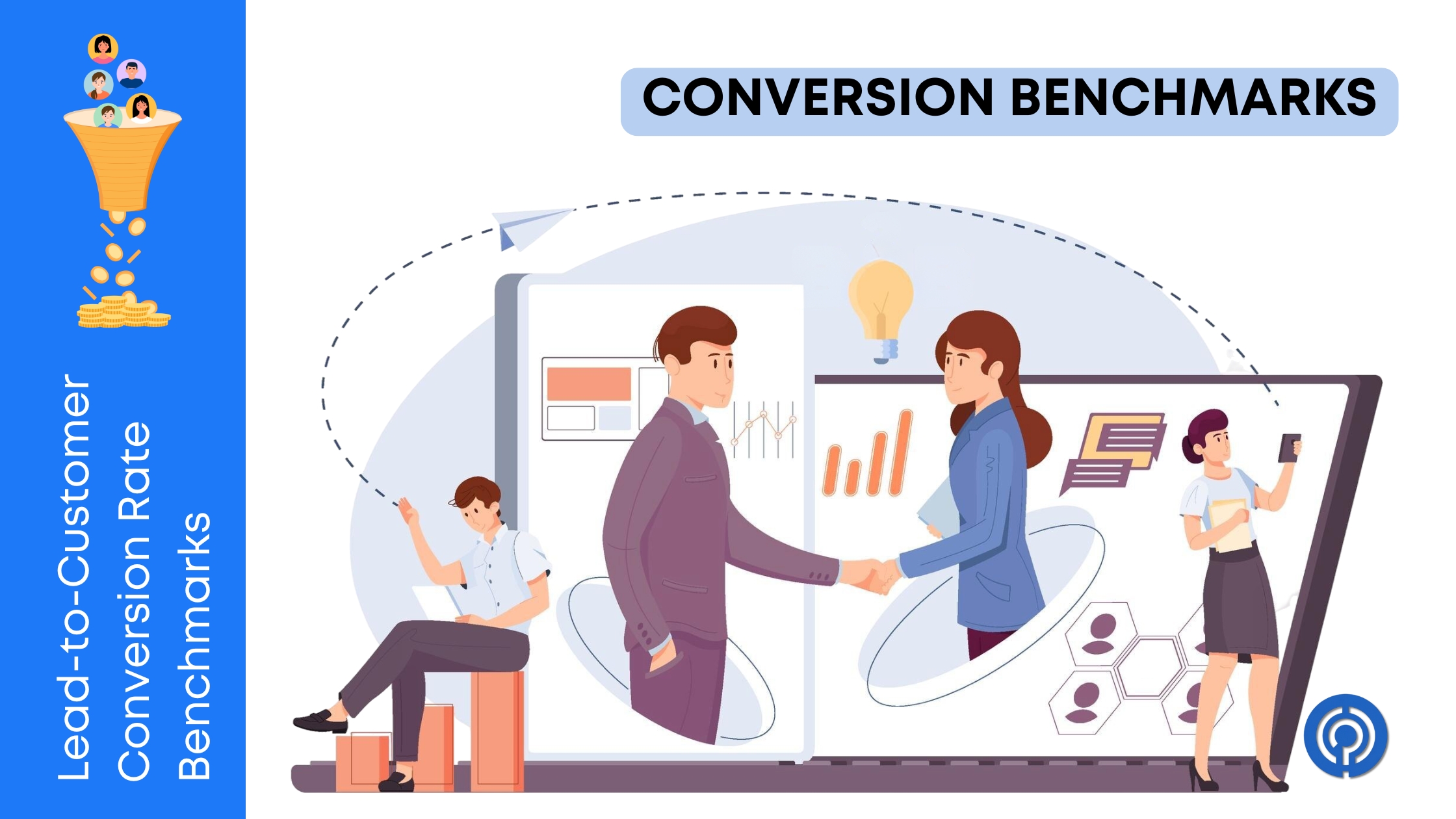
Conversion rate benchmarks are among the most cited and least trusted numbers in marketing. Every industry survey produces figures that seem reasonable in aggregate and nearly useless in practice—because a conversion rate that’s excellent for an enterprise SaaS company closing six-figure contracts through a four-month sales cycle looks like a catastrophic failure for a consumer e-commerce brand running paid acquisition to a two-step checkout. Context is everything, and most benchmark reports don’t provide nearly enough of it.
What makes lead-to-customer conversion data genuinely useful is understanding which stage of the funnel it refers to, which industry it’s drawn from, and what kind of lead source produced those numbers in the first place. An inbound lead from an organic search query that answered a specific product question converts very differently than a cold outreach contact added from a purchased list. Treating them as equivalent—which many benchmark reports implicitly do—produces benchmarks that mislead more than they inform.
This guide works through the conversion rate data that holds up across methodologies, explains why the numbers vary so dramatically across industries and lead types, and covers which tools give you the measurement infrastructure to hold your own funnel accountable rather than just comparing it to industry averages.
What the Benchmark Data Actually Shows?
Lead-to-customer conversion rates, when measured consistently from first contact to closed sale, typically fall between one and five percent across most B2B industries. That range sounds small, but it masks meaningful variation. Technology companies with strong inbound content programs regularly achieve rates in the three to five percent range from qualified organic leads. Professional services firms with long relationship-driven sales cycles often see lower rates by raw percentage but dramatically higher average contract values, making the comparison difficult. B2C e-commerce operates at a different scale entirely—higher volume, lower friction, and conversion rates that can legitimately range from half a percent to eight percent depending on price point, brand trust, and traffic quality.
According to HubSpot’s State of Marketing report, conversion rates from organic search leads consistently outperform paid channels when measured to closed revenue rather than just pipeline entry. The gap isn’t marginal—organic leads close at roughly two to three times the rate of equivalent paid leads across most B2B categories. The mechanism is straightforward: a prospect who found your product by searching for a specific problem they’re trying to solve has already done the qualification work themselves. A lead delivered by paid targeting has demonstrated demographic match, not intent.
The funnel stage where most conversion rate analysis goes wrong is the MQL-to-SQL transition. Marketing-qualified leads are typically measured by behavioral signals—page visits, content downloads, webinar attendance—rather than demonstrated purchase intent. Sales-qualified leads represent the subset that has expressed genuine buying interest in a direct conversation. The MQL-to-SQL rate in most B2B organizations sits somewhere between fifteen and thirty percent, according to research from Forrester, meaning the majority of what marketing counts as leads are never seriously pursued by sales. That gap represents a structural measurement problem as much as a lead quality problem.
Why Industry and Channel Shape the Numbers?
The variation in conversion rates across industries is real and significant rather than statistical noise. Financial services and legal sectors tend to show lower raw conversion rates—often below two percent—because purchase decisions involve extended evaluation periods, multiple stakeholders, and regulatory considerations that extend sales cycles. Technology and software companies with strong product-led growth motions can push well above five percent for free-trial-to-paid conversions because the product itself does qualification work that sales teams would otherwise handle manually.
Channel effects are equally pronounced. Email sequences sent to previously opted-in subscribers convert at meaningfully higher rates than cold outreach to net-new contacts, even when the messaging is identical. Landing page leads from high-intent paid keywords convert better than display-driven leads from awareness campaigns, even within the same ad platform. Referral leads—contacts introduced through an existing customer relationship—routinely outperform every other channel by a significant margin and are systematically under-tracked in most companies’ attribution models.
What this means in practice is that a company achieving a two percent lead-to-customer rate from cold outbound while simultaneously achieving six percent from organic inbound isn’t operating at two percent overall—it has two fundamentally different conversion pipelines that should be measured, optimized, and resourced independently.
Tools That Give You Real Conversion Visibility
HubSpot
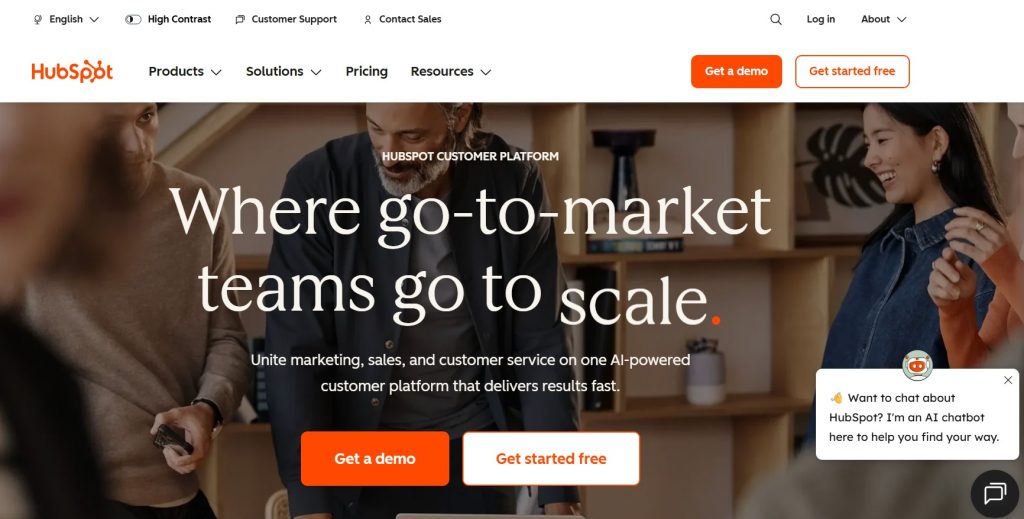
HubSpot remains the most complete platform for tracking lead-to-customer conversion rates across the entire funnel without requiring stitched-together integrations between separate tools. The contact timeline connects every marketing touchpoint—form fills, email opens, page visits, ad clicks—to deal outcomes, which means you can measure true first-touch and multi-touch conversion rates from a single source of truth rather than reconciling exports from multiple systems.
The lifecycle stage framework—Subscriber, Lead, MQL, SQL, Opportunity, Customer—is configurable to match how your actual sales process works rather than forcing you into an arbitrary stage definition. Conversion rates between each stage are reportable natively, and the attribution report shows which channels and content pieces contributed to closed revenue, not just pipeline volume.
Salesforce

Salesforce handles conversion tracking at the scale and complexity that enterprise organizations actually operate at. When deals involve multiple contacts across multiple companies, run for six to eighteen months, and require territory-based lead routing, the CRM infrastructure needs to reflect that reality rather than simplifying it away.
Lead conversion in Salesforce creates connected Contact, Account, and Opportunity records in a single action, preserving the full lead history while enabling pipeline-stage reporting from that point forward. Campaign influence reporting traces which marketing campaigns touched which deals at which point in the cycle, giving revenue operations teams the data to make accurate attribution arguments during budget discussions.
ActiveCampaign

ActiveCampaign is where conversion rate optimization gets practical for organizations where email nurture sequences are doing significant conversion work between lead capture and first sales conversation. The platform’s split-testing capabilities apply across automation sequences rather than just individual emails, which means you can test whether a five-email nurture sequence converts better than a three-email sequence before routing contacts to sales—not just which subject line performs better.
The deal pipeline and lead scoring work in combination to create a measurable threshold at which marketing hands off to sales, making the MQL-to-SQL transition trackable rather than approximate. For teams whose conversion rates suffer most at the nurture stage rather than at close, this is where measurement improvements tend to produce the biggest actual gains.
Hotjar

Hotjar addresses the part of lead conversion that CRM data doesn’t capture—what’s happening before a lead exists. Session recordings and heatmaps show exactly where visitors lose interest, stop scrolling, or abandon a form, which makes diagnosing landing page conversion problems an observational exercise rather than a guessing game based on aggregate analytics.
For teams troubleshooting low inbound conversion rates—where the traffic exists but leads aren’t materializing at expected rates—Hotjar typically surfaces the answer faster than any A/B test cycle because it shows individual visitor behavior at the moment of drop-off. Funnel analysis within Hotjar connects page-level behavior to form submission events, making it possible to trace which friction points are suppressing the conversion rate that ultimately feeds the top of the sales funnel.
Conclusion
Lead-to-customer conversion benchmarks are a useful starting point for understanding whether your funnel is operating within a normal range, but they lose most of their value when applied without distinguishing between lead sources, industries, and funnel stages. A two percent overall rate can represent excellent performance for one business and a serious structural problem for another, depending entirely on what mix of channels and deal types produced it.
HubSpot and Salesforce provide the CRM infrastructure to measure conversion rates accurately from lead through close. ActiveCampaign adds optimization capability to the nurture stage where many conversion losses happen quietly before a lead ever reaches sales. And Hotjar makes visible the pre-lead behavior that determines whether inbound conversion rates are a traffic problem, a page problem, or a targeting problem. Getting those answers right is what separates companies that improve their conversion rates from companies that benchmark them indefinitely without acting.
Leave a Comment