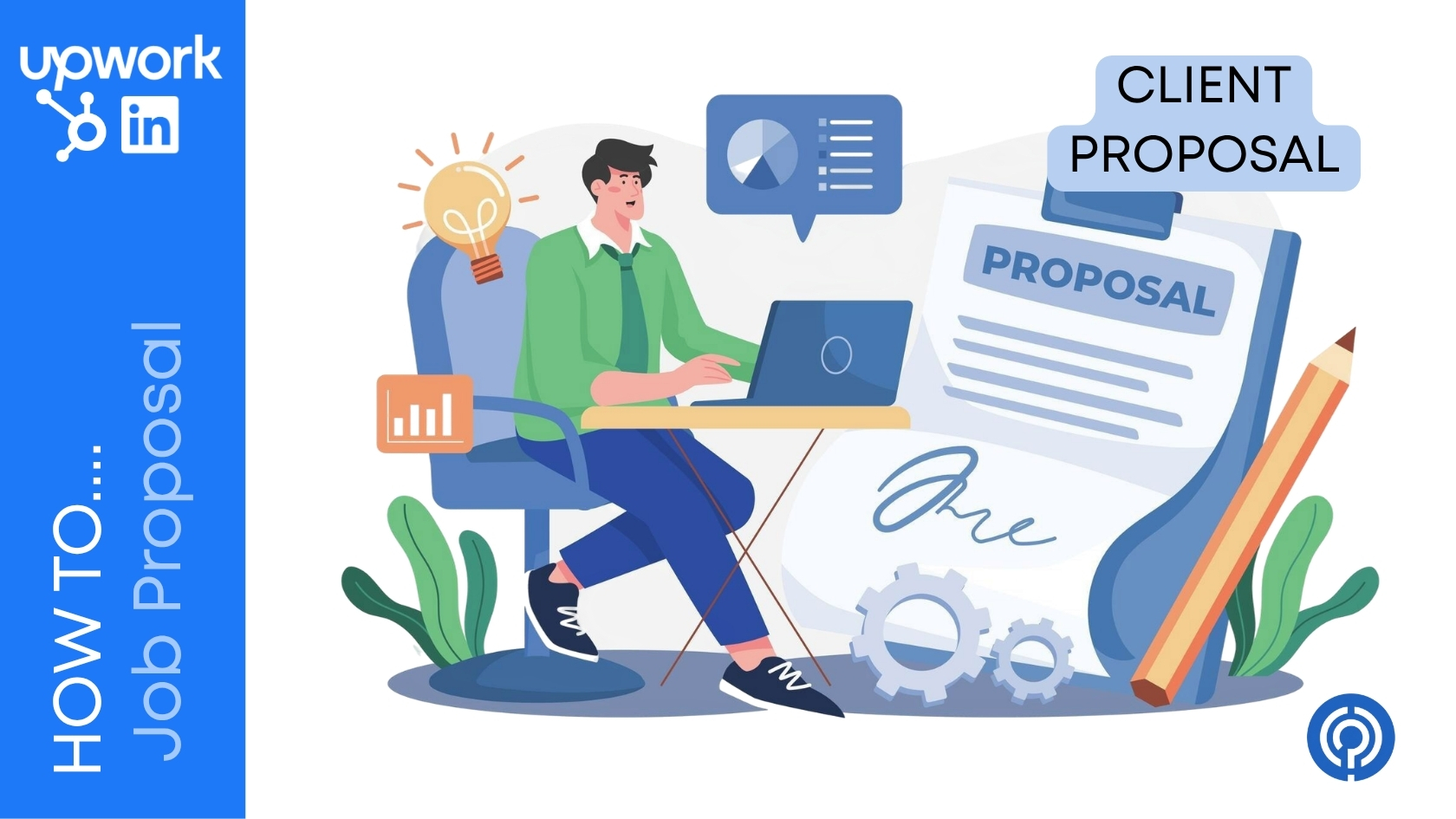
Let’s be completely real here: sending out proposals only to get hit with total silence is incredibly frustrating. You spend an entire afternoon putting together something thoughtful, hit send, and then… absolutely nothing. Just crickets. It is easy to blame the clients and assume they are just being difficult, but the real issue is usually much simpler. Most proposals look and sound exactly like everyone else’s copy-pasted templates.
A winning proposal doesn’t need to blow anyone away with corporate buzzwords, formal jargon, or over-designed formatting. Its only job is to make the client feel like you genuinely understand their situation and that hiring you is the safest, smartest move they can make. Let’s look at exactly how to build that trust from the first sentence.
What your clients actually care about
You have to stop focusing on what you want to say and start focusing on what the client needs to hear. When someone opens your document, they are secretly asking themselves three basic questions:
- Do they actually get what my problem is?
- Can I trust them to hand this over on time?
- Is working with them going to be a total headache?
If you can clear up those three anxieties right out of the gate, you are already miles ahead of most of the competition.
Before typing out a single word, go back and read their job description a couple of times. Poke around their website and check their LinkedIn page if they have one. Pay close attention to their specific phrasing. If they repeatedly emphasize a “tight turnaround,” speed is your main selling point. If they keep bringing up “brand cohesion,” make sure that exact phrase finds its way into your pitch.
Start with a hook, not a resume
Most people open their proposals with a massive snooze-fest: “Hi, my name is Sarah and I’ve been a graphic designer for eight years.” Nobody cares yet. The client doesn’t care about your backstory; they care about their immediate problem.
Instead of leading with your resume, try an opening like this:
You mentioned wanting a fresh sales deck that helps your team close enterprise deals without getting bogged down. It looks like the real hurdle here is stripping away the unnecessary technical fluff while keeping the core value clear. I’ve built these exact types of high-conversion decks for three separate B2B brands recently, and I’d love to handle this one for you.
That kind of intro immediately proves that you read their post, you grasp the exact pain point, and you’ve successfully handled the exact same issue before.
Map out the exact scope of work
Vague language is an instant dealbreaker. If you just write down “I will redesign your website,” the client has no idea what they are actually paying for. You need to outline the specific boundaries of the project so they feel safe and you protect yourself from endless scope creep down the road.
Lay it out cleanly:
First, we will audit your current layout to find the exact bottlenecks hurting conversions. From there, I’ll build custom designs for your homepage, about section, and contact page—making sure every single element renders perfectly on mobile screens. The package includes two full rounds of tweaks based on your feedback, and I’ll hand over the final design assets in whatever raw file formats your team prefers.
When you spell it out like that, the client knows exactly what to expect, and you won’t end up doing a million extra favors for free later on.
Let them visualize the working relationship
Everyone claims to do “high-quality work” or possess “great communication skills.” It means nothing because the bad freelancers say the exact same thing. What a client really wants is to look down the road and picture what a typical week working with you actually looks like.
We will kick things off by spending the first few days completely digging into your target audience and strategic goals so there’s zero guessing games. From there, I jump straight into mapping out an initial rough layout based on that blueprint. You get to review this early draft immediately so we can easily course-correct long before wasting time on hyper-detailed design work. Once the foundation looks solid, we will pass notes back and forth to polish up the edges until it lines up perfectly with your vision. Finally, I wrap everything up by packaging the raw assets into whatever file formats you need, and we can jump on a quick huddle call to walk through the final implementation.
Seeing a clear project roadmap removes the anxiety of the unknown and makes you look like an absolute professional.
Lean on tangible proof, not empty claims
Adjectives like “expert” or “experienced” are completely hollow. Instead of telling them you’re great, show them real-world scenarios where someone trusted you and it paid off.
Talk about real change instead. Mention how you adjusted a previous client’s sales pitch to scale up their closing rate, or touch on an early-stage deck you built that helped a founder pull in their first major round of outside funding. Even something simple like launching 25 separate business websites with zero negative reviews makes a massive impact.
If you are brand new and don’t have a deep case study vault yet, focus on what you can guarantee right now. Talk about your responsiveness, your turnaround speed, or a deep passion project you built for a local non-profit. Real, raw enthusiasm will always beat generic corporate fluff.
Pro Tip: Don’t be afraid to pull in external validation to back up your philosophy. Referencing data from authority sites like HubSpot regarding what actually drives consumer engagement adds massive credibility to your approach without making you sound like a desperate salesperson.
Keep your pricing completely transparent
Confusing pricing structures kill deals faster than anything else. Do not make a prospect pull out a calculator or guess what the final invoice will look like.
Whenever possible, anchor the project to a single, comprehensive flat fee:
The total investment for this project is $1,500. That covers every single phase mapped out above, including the initial discovery, design executions, and both revision rounds. If we decide to add extra landing pages or entirely new features later on, we can scale the scope at a flat rate of $100 per page.
It’s completely straightforward and leaves zero room for ugly financial surprises at the end of the month. If you absolutely have to bill by the hour, give them a realistic estimate alongside a hard cost ceiling so they know the bill won’t suddenly spiral out of control. And never apologize for your rates. If you can solve their problem, you are worth the money.
Give them a predictable timeline
Clients operate on strict launch dates, and laying out a realistic countdown makes your entire proposal feel tangible. You don’t need a formal, rigid chart here. Just map out the schedule casually by letting them know that the first three days will be dedicated strictly to discovery calls and competitor research. After that initial look, we switch over to drafting the actual layout over the next few days. Once you check that out, we spend about forty-eight hours fixing up any revisions so we can easily hit the final handoff right around the ten-day mark.
If their posting lists a specific deadline they are sweating over, call it out. Explicitly show them how this exact pace keeps them perfectly on track for their internal milestone.
Lower the friction to say yes
Never close a proposal with a weak, passive sign-off like “Let me know what you think!” Tell them exactly what the immediate next step looks like to get the ball rolling.
Try a direct call to action:
If this plan looks solid to you, just shoot back a quick reply and I will drop a simple digital agreement into your inbox. I actually have an opening to kick off the research phase as early as Monday morning, or I can hold a production slot for you later next week if you need a bit more time to sync up.
You are removing all the awkward guesswork. There are no complicated hurdles—just a wide-open, frictionless path forward.
Stop copying and pasting everything
Templates are great for keeping your internal workflow organized, but blasting the exact same generic text to twenty different listings is painfully obvious. Clients spot a canned response in half a second.
Spend five minutes tailoring the copy before hitting send. Make it a point to call out a highly specific detail buried deep in their project description, adopt their unique internal vocabulary when talking about their product, and ruthlessly cut out any old portfolio pieces that don’t match their current niche. Even a quick, genuine compliment about something you noticed on their live website shows you actually care.
Those small, targeted adjustments prove to the client that you wrote this specific document solely for them, not a giant mass email list.
Keep the layout clean and highly scannable
Your proposal doesn’t need to look like a high-end graphic design magazine. It just needs to be incredibly easy on the eyes.
Stick to short, punchy paragraphs. Keep the layout light on the eyes. Use bold lettering on critical takeaways, split up massive paragraphs, and lean on lists when things get too dense. Lots of white space keeps them reading instead of clicking away out of pure boredom.
If you’re uploading a PDF file, double-check that every single link works perfectly. If you’re pasting text directly into a marketplace platform like Upwork, make sure your line breaks are clean so it doesn’t bunch up into an unreadable block.
Follow up without being a pest
Inboxes get chaotic, and even the most perfect proposal can accidentally get buried under an avalanche of daily emails. A quick, polite check-in can easily salvage a lost deal.
Wait two or three business days, then send a casual note:
Just checking in to make sure my proposal didn’t get lost in the shuffle. I know things are incredibly hectic on your end, so there’s absolutely no rush at all. I just wanted to make sure everything we mapped out for the scope and scheduling made sense on your end. Are you still aiming to kick this project off later this month?
This doesn’t feel pushy or desperate. It just feels helpful, organized, and professional.
Build your own modular assembly line
Once you find a few proposals that start landing clients consistently, save those successful components into a master file. Keep a dedicated document stocked with your favorite opening hooks, standard process logs, and clean scope checklists.
When a fresh opportunity hits your radar, you can pull your proven structural building blocks and combine them with customized details about that specific client. You’ll end up writing winning proposals in a fraction of the time without dropping your quality.
To sum it all up
At the end of the day, locking down clients doesn’t require a secret script. It just means being a normal, organized professional who listens. Prove that you actually grasp the unique headache they are dealing with, show them a clear timeline of how you intend to fix it, and make it incredibly low-friction for them to give you the green light.
Take these adjustments and apply them to your next few outreach efforts. Give yourself permission to spend those extra five minutes tweaking the copy for each listing and see how the response rate changes. A proposal isn’t just an administrative chore—it’s your single best foot in the door. Make it hit home.


Leave a Comment