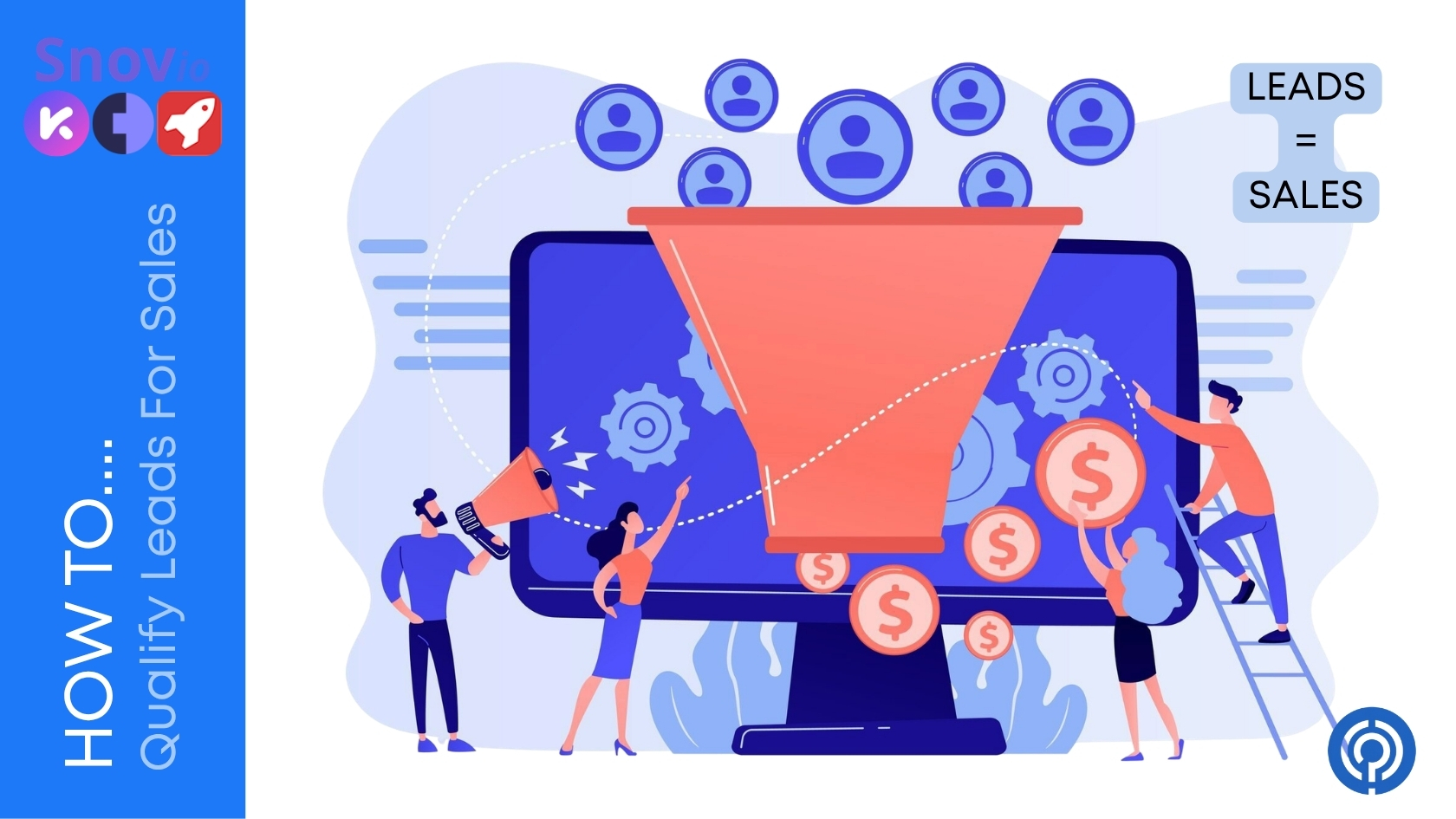
Let’s be completely honest: there is nothing more draining for a sales team than drowning in a massive sea of leads. They’re calling, emailing, and chasing down contacts, but the conversion rate barely moves. The problem isn’t their effort. It’s that they’re spending time on people who were never going to buy.
This is where lead qualification comes in. It’s the difference between a sales team that works hard and one that works smart. When you qualify leads properly, your reps stop chasing ghosts and start closing deals. Let’s break down exactly how to make that happen.
What Is Lead Qualification?
Lead qualification is simply figuring out which prospects are worth your time. Not everyone who downloads your ebook or fills out a form is ready to buy. Some are just browsing. Others don’t have the budget. A few are competitors doing research.
Qualification helps you sort the real opportunities from the noise. It’s a process of asking the right questions, scoring responses, and deciding who gets personal attention from your sales team and who goes into a nurture sequence.
The goal isn’t to disqualify everyone. It’s to make sure your best reps are talking to your best prospects at the right time.
Why Most Teams Get This Wrong?
Many sales teams treat every lead the same. They call within five minutes of a form submission, give the same pitch, and wonder why conversion rates are low. Others wait too long, letting hot leads go cold.
The biggest mistake is not having a clear process. If you ask five reps what makes a lead “qualified,” you get five different answers. That inconsistency kills your pipeline.
Another common error is relying only on gut feeling. Experience matters, but data matters more. You need a system that scores leads based on real behavior, not just hunches.
The Classic Frameworks That Still Work
You don’t need to reinvent the wheel. Several proven frameworks help you qualify leads consistently. Pick one that fits your business and stick with it.
BANT: Budget, Authority, Need, Timeline
BANT is old but gold. It’s simple and works for most B2B sales.
- Budget: Can they afford what you’re selling? Ask directly: “What’s your budget range for this project?” If they don’t have money allocated, they’re not ready.
- Authority: Are you talking to the decision-maker? If not, you need to reach the person who can sign off. Ask: “Who else needs to be involved in this decision?”
- Need: Do they have a problem you can solve? The best question is: “What’s the biggest challenge you’re facing right now?” If your product doesn’t solve that, move on.
- Timeline: When do they want to buy? “What’s your target date for having this solution in place?” If it’s “someday,” they’re not qualified today.
MEDDIC: Metrics, Economic Buyer, Decision Criteria, Decision Process, Identify Pain, Champion
MEDDIC is detailed and works best for enterprise sales with multiple stakeholders.
- Metrics: What numbers will improve if they buy? Revenue? Efficiency? Cost savings?
- Economic Buyer: Who controls the budget? This person cares about ROI above all else.
- Decision Criteria: What factors will they use to choose a vendor? Price? Features? Support?
- Decision Process: What steps must they take to buy? Legal review? IT approval? Know the map.
- Identify Pain: The specific, costly problem they’re trying to solve.
- Champion: Who inside their company will fight for you? This person is your internal salesperson.
MEDDIC takes longer but prevents surprises late in the deal.
Building Your Lead Scoring System
Frameworks guide conversations. Scoring automates the process. A good lead scoring system assigns points based on who the prospect is and what they do.
Explicit Scoring: Who They Are
This measures fit. Does this person work at a company that looks like your best customers?
Give points for:
- Company size: 10 points if they’re in your sweet spot (e.g., 50-500 employees)
- Industry: 15 points if they’re in a high-value vertical
- Job title: 20 points if they’re a decision-maker (VP, Director, C-level)
- Location: 5 points if they’re in a target region
These answers usually come from form fields or data enrichment tools like Snov, which can find and verify lead information automatically.

Implicit Scoring: What They Do
This measures interest. How engaged are they with your brand?
Give points for:
- Website visits: 5 points per visit, 10 points for pricing page views
- Content downloads: 15 points for a whitepaper, 5 points for a blog subscription
- Email engagement: 10 points for opening, 20 points for clicking
- Demo requests: 50 points automatically
- LinkedIn engagement: 5 points for following your company page
Track these behaviors in your CRM or marketing automation platform.
Setting Your Threshold
Decide what score makes a lead “sales-ready.” Many teams use 100 points as the threshold, but you should test this.
If sales gets too many leads, raise the threshold. If they’re starving for opportunities, lower it. Review this quarterly.
The Step-by-Step Qualification Process
Here’s a practical workflow that works for most teams:
Step 1: Capture and Enrich
Leads come in from forms, ads, events, or cold outreach. Immediately enrich them with firmographic data using tools like Snov, Kaspr, Cognism, or AeroLeads. This fills in company size, industry, and contact details automatically.
Step 2: Initial Score
Apply your scoring rules. Anyone below 30 points gets dropped into a long-term nurture campaign. Anyone above 70 points gets fast-tracked to sales.
Step 3: First Contact (Within 24 Hours)
An SDR reaches out via email or phone. They use your chosen framework (BANT, CHAMP, etc.) to verify information and dig deeper.
Step 4: Deep Qualification Call
If the lead shows promise, schedule a 30-minute discovery call. This is where you uncover real pain, budget, timeline, and decision-making process.
Step 5: Handoff to Sales
If the lead scores high and passes qualification, they become a Sales Qualified Lead (SQL). The SDR briefs the account executive with notes, scores, and next steps.
Step 6: Continued Nurturing
Leads that aren’t ready stay in nurture tracks. Send them relevant content based on their interests. Re-engage them every 90 days to see if anything has changed.
Technology That Makes This Easier
You can’t do this at scale without the right tools. Here’s what you need:
- CRM: HubSpot, Salesforce, or Pipedrive to track scores and stages.
- Data Enrichment: Snov finds and verifies email addresses, phone numbers, and company details. It also helps you build lead lists based on your ideal customer profile. With features like LinkedIn automation and email warmups, it’s built for scaling outreach safely.
- Kaspr and Cognism are solid alternatives for finding contact data, especially in Europe where GDPR compliance is critical.
- AeroLeads works well for finding prospects from LinkedIn and other social platforms.
- Marketing Automation: Mailchimp, Marketo, or ActiveCampaign to track behavior and update scores automatically.
- Call Recording: Gong or Chorus.ai to analyze sales conversations and spot qualification patterns.


Common Mistakes That Kill Your Pipeline
- Ignoring Negative Scores: Leads lose points too. If someone hasn’t opened an email in 90 days, subtract 10 points. If they unsubscribe, subtract 50. This keeps your database clean.
- Setting and Forgetting: Your scoring model isn’t permanent. Review it every quarter. Check which leads actually converted and adjust your point values accordingly.
- Sales and Marketing Misalignment: If marketing thinks a lead is qualified but sales disagrees, you have a problem. Hold weekly meetings to review lead quality and share feedback.
- Chasing Perfection: You don’t need a perfect system. You need a good system that you actually use. Start simple, measure results, and improve over time.
Metrics That Prove It’s Working
How do you know your qualification process is effective? Track these numbers:
- MQL to SQL Conversion Rate: The percentage of marketing-qualified leads that sales accepts. Aim for 30% or higher.
- SQL to Opportunity Rate: How many qualified leads turn into real pipeline opportunities? Target 40%.
- Lead Velocity: Are you generating more qualified leads each month? This predicts future revenue.
- Sales Cycle Length: Good qualification should shorten your sales cycle because you’re talking to the right people from the start.
- Win Rate: The percentage of qualified leads that become customers. If this is low, your qualification is too loose.
Making It Stick: Training Your Team
A process is only as good as the people using it. Train your team thoroughly.
- Role-Play: Practice qualification calls weekly. Have reps take turns being the prospect. Record these sessions and review them together.
- Call Reviews: Listen to real qualification calls as a team. What went well? What questions were missed? Tools like Snov integrate with CRMs to log these interactions automatically.
- Shadowing: New reps should shadow your best qualifier for at least a week. They’ll pick up nuances that aren’t in any playbook.
- Score Your Reps: Give managers a scorecard that tracks whether reps are asking the right questions and updating CRM fields. Make it part of their performance review.
The Human Touch in a Data-Driven Process
All the frameworks and scoring in the world can’t replace good judgment. Data tells you who to call, but people still buy from people they trust.
Your reps need to listen more than they talk. They need to read between the lines. If a prospect says “we’re just exploring options,” that’s code for “not ready.” If they mention a competitor by name, they’re further along than they admit.
Qualification is part science, part art. The science gets you in the right ballpark. The art closes the deal.
Scaling Your Qualification Process
As you grow, you can’t manually qualify every lead. Here’s how to scale:
- Use AI: Tools like Snov use AI to detect buying signals and update lead scores automatically based on behavior patterns.
- Tier Your Team: Have junior SDRs handle initial qualification. Only pass the best leads to senior reps.
- Automate Nurture: Set up email sequences that educate leads over time. When their score hits your threshold, alert a rep automatically.
- Create Playbooks: Document your qualification process in detail. When you hire new reps, they can hit the ground running.
When to Disqualify (And Why That’s a Win)
Disqualifying a lead feels like losing, but it’s actually winning. Every minute your reps spend on a lead that will never buy is a minute they’re not spending on one that will.
Create a “disqualified” category in your CRM. Track why leads were disqualified:
- No budget
- No need
- No timeline
- Too small
- Wrong fit
Review this list monthly. If you see patterns, adjust your marketing to attract better-fit leads from the start.
The Bottom Line
Lead qualification isn’t about being picky. It’s about being strategic. When you qualify leads properly, your sales team stops wasting time and starts closing deals. Your conversion rates go up. Your sales cycle shortens. Everyone is happier.
Start with a simple framework like BANT. Add basic scoring. Pick tools that fit your budget and team size. Snov is a solid choice for lead acquisition and enrichment, especially if you’re doing cold outreach at scale.
Train your team religiously. Review your process quarterly. Measure everything.
Most importantly, remember that qualification is a conversation, not an interrogation. You’re trying to help prospects figure out if you’re the right fit for them. When you approach it that way, everyone wins.
Your sales team will thank you. Your CFO will thank you. And your prospects will appreciate that you’re not wasting their time either.
Now go qualify some leads.

Leave a Comment