A hospital in the US gets hit with a ransomware attack. Patient records for 150,000 people are exposed. Regulators open an investigation. Within six months, the organization is handed a multi-million dollar penalty — not because they got hacked, but because they were operating without the security controls they were legally required to have in place.
That distinction matters. Getting breached is one thing. Being non-compliant when it happens is something else entirely.
Cybersecurity compliance is the set of rules your industry requires you to follow to protect sensitive data. These aren’t optional suggestions. They are legal frameworks with real teeth — audits, fines, and in some cases, criminal liability. The tricky part is that the rules are different depending on what kind of business you run and the type of data you handle.
This guide breaks down the major compliance frameworks by industry, explains what each one actually demands, and points you toward tools that make staying compliant far less painful.
Healthcare: HIPAA
If you run any kind of healthcare operation — a clinic, a digital health app, a medical billing service — you are subject to HIPAA, the Health Insurance Portability and Accountability Act. This framework governs how Protected Health Information (PHI) is stored, accessed, transmitted, and deleted.
HIPAA breaks its requirements into two main rules. The Privacy Rule controls who can see or use patient data. The Security Rule specifies the technical and physical safeguards you need to have in place.
In practical terms, that means:
- Encrypting patient data both in transit and at rest
- Running access controls so only authorised staff can pull up records
- Keeping audit logs of everyone who accesses PHI
- Training staff on data handling procedures at least annually
- Having a signed Business Associate Agreement with any third-party vendor that touches patient data
The penalty tiers are steep. Minor violations that go uncorrected can cost anywhere from tens of thousands to hundreds of thousands of dollars per incident, depending on the level of negligence involved. Wilful violations that go uncorrected can result in criminal charges for individuals.
One of the most overlooked HIPAA requirements is the annual risk assessment. Many smaller healthcare providers skip it because it feels like paperwork, but it is a core compliance obligation. This assessment documents every vulnerability in your systems and shows regulators that you are actively managing risk, not ignoring it.
Finance: When Cards and Public Markets Are Involved
If money flows through your system, you are almost certainly dealing with at least one major compliance standard — and quite possibly two.
PCI-DSS is the one most people have heard of. The Payment Card Industry Data Security Standard kicks in the moment your business touches credit card data — whether you’re a bank, a payment processor, an online shop, a fintech startup, or really any software product that charges users for anything. There are twelve core requirements split across six control areas: secure networks, cardholder data protection, vulnerability management, access restriction, ongoing monitoring, and an information security policy. Sounds like a lot, because it is.
The standard runs on four tiers based on how many transactions you process per year. The volume changes your audit requirements, but the actual security controls you need to have in place don’t change all that much between tiers.
SOX is a different beast. The Sarbanes-Oxley Act is a US law that applies to publicly listed companies, and its Section 404 requirements have significant IT security implications. If your financial data lives inside a system, that system needs to have audit logs, access restrictions, change records, and a tested disaster recovery process. Finance and IT often have to work together closely to satisfy a SOX audit.
For finance teams building out their compliance program, check out this guide on how to generate sales reports from CRM data to understand how your reporting infrastructure needs to be structured and secured.
Retail and eCommerce: PCI-DSS and GDPR
Retailers are squarely in PCI-DSS territory the moment they start taking card payments. But if they sell to customers in the European Union or the UK, they also fall under GDPR — the General Data Protection Regulation.
Here’s where it gets complicated for online retailers: running a store that ships to EU customers means you are juggling two separate rule sets at once. Your checkout flow has to satisfy PCI-DSS for the payment side, while your cookie banners, contact forms, email lists, and data retention practices all need to line up with GDPR on the personal data side. Miss either one and you’re exposed.
The safest approach for online sellers is to run on a platform that handles PCI compliance at the infrastructure level. Shopify is PCI-DSS Level 1 certified, meaning every store on the platform inherits that baseline compliance automatically.
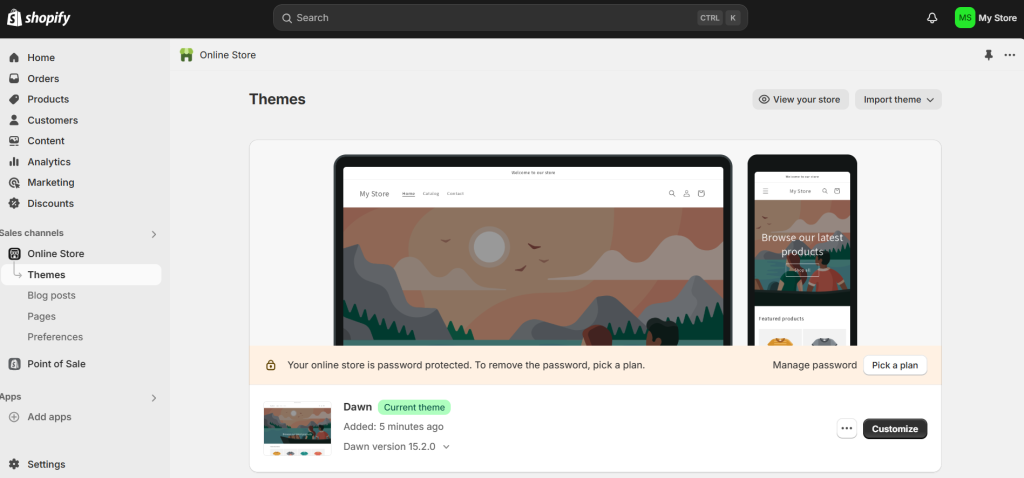
For sellers who need detailed transaction reporting as part of their audit trail, Shopify’s built-in analytics make it easy to pull payment records and sales data without ever touching raw cardholder information.

For WooCommerce-based stores, compliance requires more manual configuration — but the platform supports all the necessary extensions to achieve PCI compliance through your payment gateway settings. Review this breakdown on how to add product descriptions that convert to also understand how product data should be structured for both SEO and data protection purposes.

Technology and SaaS: SOC 2 and ISO 27001
If you are building a SaaS product, your enterprise customers are going to ask you for one thing before they sign a contract: your SOC 2 report.
SOC 2 (System and Organization Controls 2) is an audit framework developed by the American Institute of CPAs. It evaluates your controls across five Trust Service Criteria: security, availability, processing integrity, confidentiality, and privacy. A Type I report documents your controls at a point in time. A Type II report — which is what most enterprise buyers actually want — demonstrates that those controls operated effectively over a sustained period, typically six to twelve months.
Getting a SOC 2 Type II report is a significant undertaking. You need to define your controls, collect evidence continuously, and go through an external audit by a licensed CPA firm. The process is time-consuming, but it is often the single biggest trust signal you can offer a potential enterprise customer.
ISO 27001 takes a different approach. It’s the internationally recognized standard for information security management, and unlike SOC 2, it results in an actual certification rather than an audit report. European enterprise clients tend to ask for it specifically, so if you’re selling internationally, it’s worth factoring into your compliance roadmap.
Both frameworks share a common thread: they require you to document your security policies, train your staff, and prove you are continuously monitoring your security posture. That means having audit logs, access review records, vendor risk assessments, and incident response procedures in writing.
The Universal Baseline: Controls Every Industry Needs
Regardless of which specific framework applies to your business, several controls show up across every single one of them.
- Multi-Factor Authentication (MFA): Every compliance framework now treats MFA as table stakes, not a bonus. Any system that handles regulated data needs a second verification layer beyond a password — full stop.
- Access Control and Least Privilege: Your team should only be able to see the data that’s directly relevant to their job. If a marketing analyst can view billing records, that’s a problem. If someone’s account gets compromised, least-privilege access limits how much damage they can do.
- Encryption: Anything regulated needs to be encrypted while sitting in storage and while moving across a network. If a hard drive walks out the door or a transmission gets intercepted, encryption is the last line of defence.
- Audit Logging: Every compliance framework wants to know who touched what and when. Those logs need to be stored in a way that can’t be edited after the fact, and kept for a long time — anywhere from one to seven years depending on what you’re dealing with.
- Patch Management: You can’t leave known vulnerabilities sitting unpatched for months. PCI-DSS puts a one-month ceiling on critical patches. Most other frameworks are in the same ballpark.
- Incident Response Plan: When something goes wrong — and eventually something will — you need a documented, rehearsed plan. Who gets called first? What gets shut down? Who notifies the regulators? Get this written down before you need it.
Password Management: The Compliance Gap Most Teams Ignore
One of the most common findings in compliance audits is weak password hygiene. Employees reusing passwords across accounts, writing credentials in shared spreadsheets, or storing them in browser autofill — all of these create audit findings and real security risk.
Every major compliance framework addresses credential management, but many businesses still treat it as an afterthought. Check out these password manager adoption rate statistics among employees to understand how widespread the problem is across industries, and how to build a culture where strong credentials are the norm rather than the exception.
For sales teams managing customer contact records and payment history inside a CRM, access permissions aren’t just a nice-to-have — they’re a compliance requirement. HubSpot lets you assign role-based permissions so junior reps can’t pull up billing data they have no business seeing.
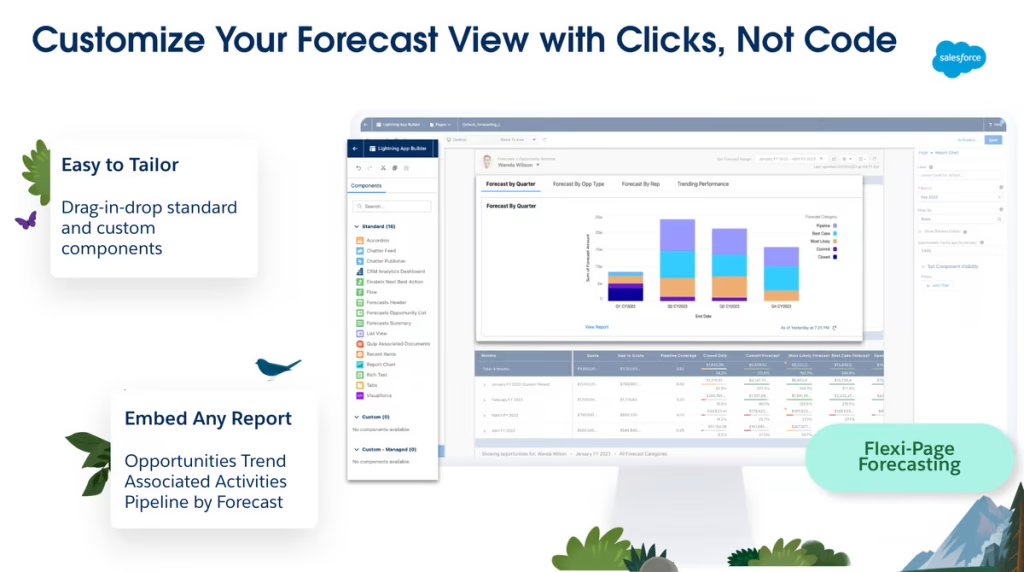
Similarly, Salesforce provides advanced audit trail features that let compliance teams review exactly who accessed which records and when — a direct requirement under both HIPAA and SOX for organizations that store regulated customer data inside their CRM.
Wrap Up
The biggest misconception about cybersecurity compliance is that it’s a box you tick once. It isn’t. Every framework requires ongoing monitoring, annual reviews, and evidence collection. HIPAA requires annual risk assessments. PCI-DSS requires quarterly vulnerability scans. SOC 2 Type II requires continuous control evidence over a twelve-month window.
The businesses that struggle most with compliance are the ones that treat it as a one-time project rather than an operational habit. The ones that sail through audits are the ones that have embedded compliance into their daily workflows — access reviews on a schedule, patch cycles documented, logs monitored automatically.
Pick the framework that applies to your industry, map your current controls against its requirements, and work through the gaps methodically. You don’t have to solve everything overnight, but you do have to keep moving. Regulators have very little patience for organizations that knew what was required and simply chose to delay.

Leave a Comment