Few things in business are more frustrating than planning an event for weeks, securing speakers, refining presentations, and then talking to an empty room. The signup numbers look fantastic. But when the day actually arrives, you’re looking at a room that’s half empty—or a webinar participant count that’s a fraction of the list.
It’s a massive buzzkill, but it happens to everyone.
Since online webinars and conferences became a normal part of work, we’ve had to make a tough choice for every single meetup: do we host it online, or do we book a physical venue? Deciding between virtual and in-person formats comes down to one critical number: the attendance rate. Let’s look at the real data, the human behavior behind those registrations, and how to pick the right setup for your next project.
What Is the Attendance Rate anyway?
Simply put, your attendance rate is the percentage of people who registered who actually show up.
If 500 people sign up for your workshop, and 300 join the call or walk through the doors, you’ve got a 60 percent attendance rate.
It’s a vital health check for your event. If your signup count is high but nobody shows up, it means your marketing hook worked, but people didn’t find the commitment worth their time. Registrations alone are just a vanity metric. If a marketing campaign brings in 2000 signups but only 100 show up (a 5 percent attendance rate), the campaign was a failure even if the signup dashboard looked impressive. Scheduling platforms like Eventbrite show that tracking this drop-off is the only reliable way to plan budget, venue size, and marketing strategies for future events.
The Virtual Side: Massive Signups, Low Friction
Getting people to sign up online is incredibly easy:
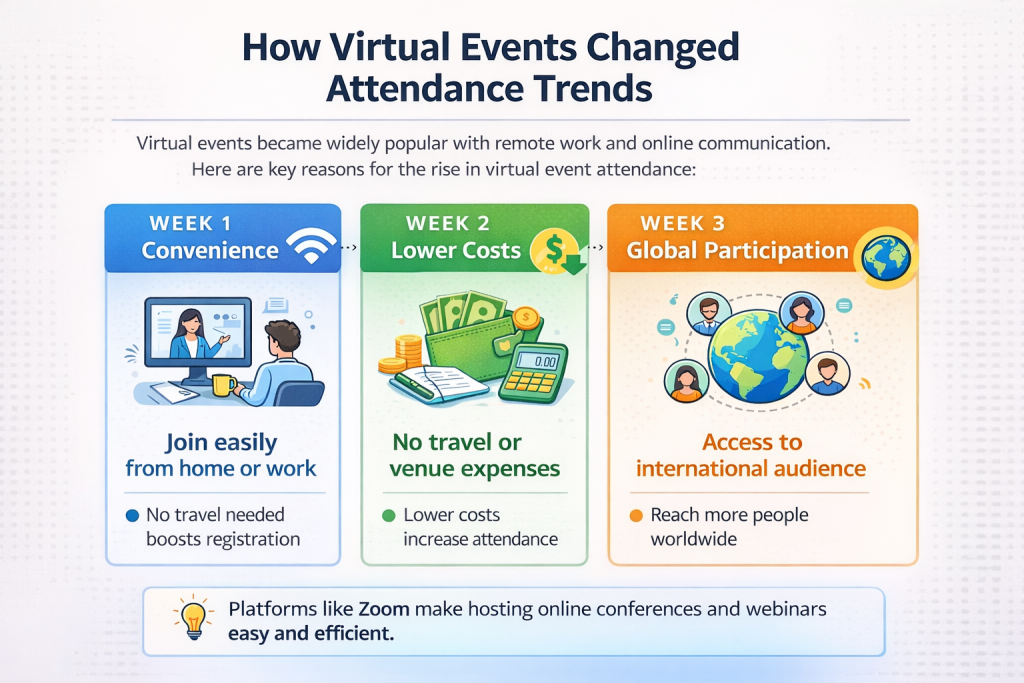
- Tear down borders: A speaker based in Chicago can chat with an audience scattered across London, Tokyo, and Sydney without anyone booking a flight.
- No travel required: Attendees click a link from their couch or desk. They avoid flights, hotel reservations, and traffic.
- Saves money on both sides: Skip the venue rental and catering invoices. Since your audience has zero travel costs, you can offer free tickets.

Services like Zoom take the complexity out of hosting, so you can focus on the content instead of troubleshooting connections.
The Real Value of Getting Together in Person
Webinars are great for convenience, but physical halls deliver what screens simply cannot: real human interactions. A grid of webcam feeds will never replace a shared room:
- Natural conversation: Let’s be real—Zoom breakout rooms are forced and uncomfortable. In-person meetups let people swap stories over coffee or in the hallway. That’s where actual business relationships form.
- No distraction loops: At a physical conference, you sit down, put your phone away, and focus. When you stay at your desk, you will inevitably end up scrolling through Slack, replying to emails, or opening new browser tabs.
- Memorable experiences: Physical product showcases, workshops, and live demonstrations build lasting memories that a simple screen share cannot match.
According to research in the Harvard Business Review, face-to-face meetings remain the absolute best way to build professional trust and connection.
ing professional relationships and trust.
Virtual vs. In-Person Attendance Rates: The Numbers
The data shows a clear trade-off: online events get way more signups, but physical events get way more commitment.
Virtual Events (Average: 40% to 60%)
Since signing up for a webinar is free and easy, people register just in case they’re free. But when the calendar reminder pops up, they’re often too busy with work and decide to skip it. They tell themselves they’ll watch the replay, but they rarely do. Expect about half of your digital registrants to show up.
In-Person Events (Average: 60% to 80%)
A physical event requires a calendar block, travel arrangements, and usually a ticket purchase. Because people have invested time and money before the event even starts, they are highly committed. The barrier to entry is higher, which means those who sign up actually make the effort to show up.
What Actually Dictates Attendance?
No matter the format, a few main things decide if people show up:
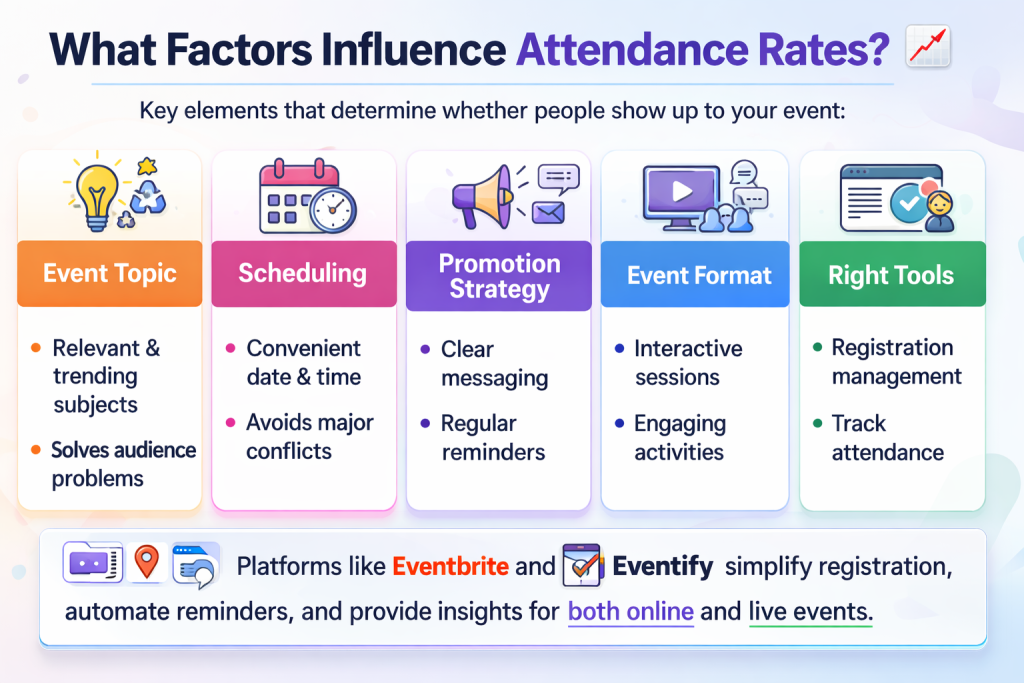
- How specific is the topic? If you’re solving a painful, urgent problem for your audience, they’ll make time. Broad topics see low turnouts.
- The timing: Avoid Monday mornings and Friday afternoons. Mid-week morning slots are the sweet spot.
- Your follow-up: People are busy. You need to remind them.
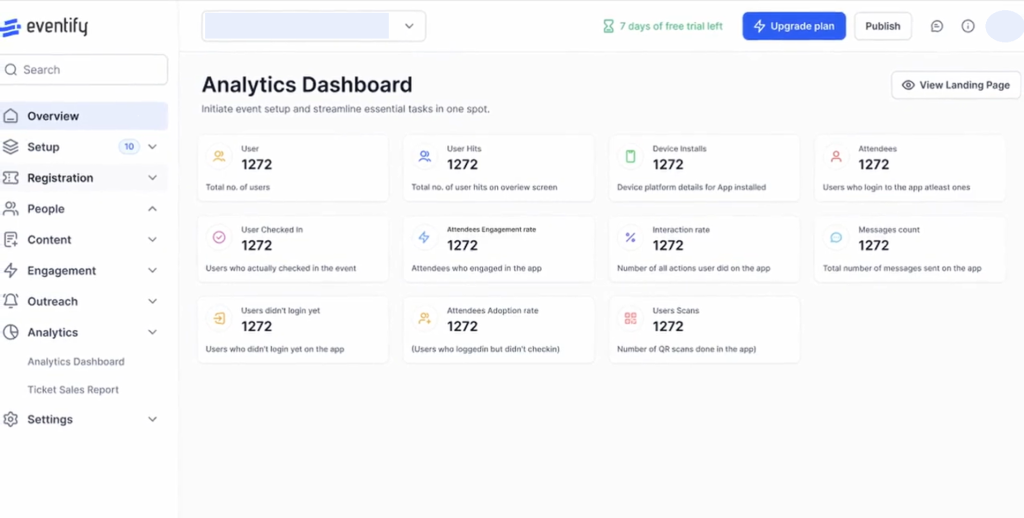
Platforms like Eventbrite or Eventify can automate these reminder emails so you can track registration trends without doing all the manual work.

The Hybrid Setup: Best of Both?
To get the best of both worlds, many organizers run hybrid events. This means you host a small, engaged group in a physical room while streaming the main sessions to a global online audience.
It sounds perfect, but be warned: hybrid events are twice the work. You’re basically running two events at the same time, and you need a solid tech team to make sure the online stream doesn’t feel like an afterthought. You’ll need high-quality cameras, directional lapel mics, and a dedicated technician who understands streaming software like OBS Studio. It is definitely not as simple as putting a laptop at the back of the room and opening Zoom. If your stream lags or the audio echoes, your remote audience will drop off in minutes.
Simple Ways to Boost Your Attendance
If you want to get more of your registrants to show up, try these steps:
- Send three reminders: A simple confirmation email is not enough. You need to remind people. Send one email twenty-four hours before you go live, another one hour before the session starts, and a final link fifteen minutes before the broadcast begins. Include the direct access link so they don’t have to search their inbox.
- Get people involved: Throw in quick surveys, chat boards, and live Q&A sessions. If they have to write replies or vote, they won’t wander off to check other windows.
- Don’t let sessions drag: Slideshows get boring fast. Break the schedule into short slots, and focus each one on a single tip they can use immediately.
- Give a live-only bonus: Share a template or a discount code that is only active during the live call. Make it clear at the start that you won’t include it in the follow-up email.
Final Thoughts
It really comes down to your primary goal:
- Go virtual if you want to reach the largest audience possible on a tight budget.
- Book a venue if you need to connect on a deeper level, build real trust, or close major business deals.
Work out your main objective first, schedule a few reminder emails, and make sure you’re offering real help to the people who give you their time.

Leave a Comment