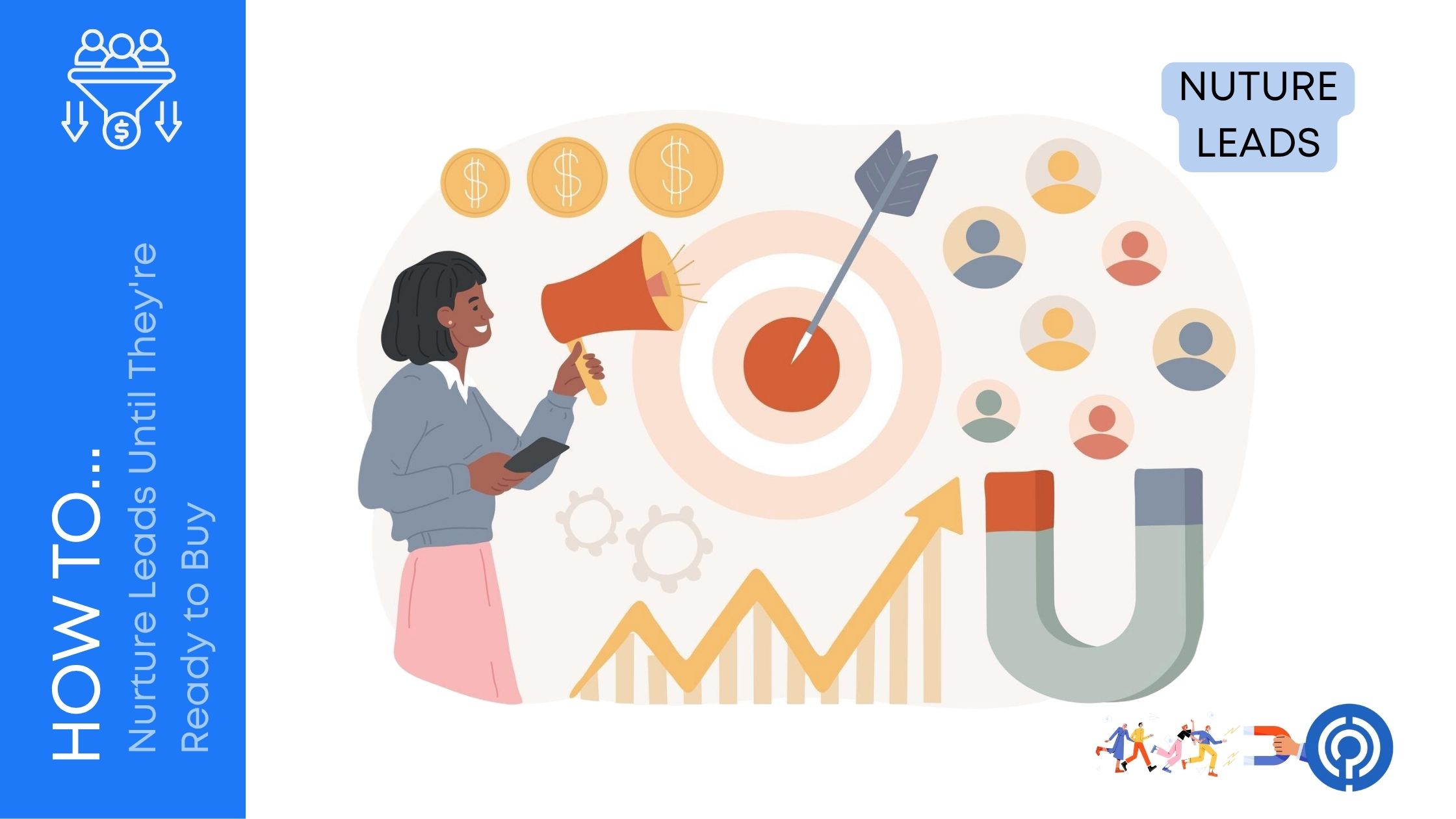
You did it. You fixed your website, killed the generic “join our newsletter” boxes, and finally got people to hand over their email addresses. Your database is growing. You have a list of leads.
Now… what exactly are you supposed to do with them?
If your immediate instinct is to blast them with a 20%-off coupon code every Tuesday, or send a daily email asking if they’re “ready to book a call yet,” step away from the keyboard. That isn’t marketing; it’s digital stalking.
The cold truth of online business is that the vast majority of the people who download your free checklist, take your quiz, or read your blog are nowhere near ready to pull out their credit cards. They are just looking around. They are trying to figure out who you are, if you actually know what you’re talking about, and if they even want to solve their problem right now.
Lead nurturing is the art of holding their hand through that awkward middle phase. It’s about building a relationship on autopilot so that when they finally do decide to buy, you are the only logical choice.
Let’s look at how to build a lead nurturing system that feels entirely human, keeps your brand top-of-mind, and actually drives revenue without making your subscribers hate you.
What Lead Nurturing Really Means?
Before we talk about automated workflows, emails, or segmenting, we have to talk about human behavior. Why aren’t people buying right away?
When someone enters your ecosystem, they usually fall into one of three buckets:
- The Problem-Aware: They know they have a headache, but they don’t know what kind of medicine they need.
- The Solution-Aware: They know exactly what kind of product or service fixes their problem, but they don’t know if you are the right person to provide it.
- The Skeptics: They’ve been burned by poor services or cheap products before. They like you, but their guard is way up.
If you treat all three of these groups the same way by screaming “BUY NOW” in every header, you lose them. Nurturing is simply the process of moving people through these mental stages at their own pace. You shift your role from a pushy salesperson to a trusted guide.
Segment Your Leads for Smarter Nurturing
Not all leads are created equal. Before you start nurturing, segment them based on behavior and readiness.
Start by looking at what they’ve done. Did they download a whitepaper? Attend a webinar? Visit your pricing page? Each action tells you something about their interest level.
Tools like HubSpot or ActiveCampaign make this easy. Set up automated tags based on actions, like “ebook downloader” or “pricing visitor.” Then create different nurture paths for each group.
For example, someone who read your beginner’s guide needs educational content. A pricing page visitor might be ready for case studies or a demo offer. Proper segmentation can boost conversions by 760%.
Once you’ve qualified leads for your sales team, as covered in our guide on how to qualify leads for your sales team, nurturing becomes even more targeted.
Build Email Sequences That Convert
First impressions matter. If someone downloads your lead magnet and you don’t email them for three weeks, they will completely forget who you are. When you finally hit them with a sales pitch out of nowhere, they’ll hit the spam button.
Your welcome sequence is your digital handshake. It should be a 3-to-5-email automation that triggers the second they opt-in. Here is how to structure it without sounding like a robot:
Week 1: Welcome and Educate
Give them the PDF, the link, or the template they asked for right away. Don’t make them jump through hoops. Inside this email, tell them exactly what to expect from you next.
Casual script idea: “Hey, here’s that spreadsheet you asked for. Over the next few days, I’m going to send you two or three quick tips on how to actually use it to save time. If you hate saving time, you can unsubscribe at the bottom of this page.”
Week 2-3: Add Value
Share a short case study or video tip. Focus on their pain points. “Struggling with low conversion rates? Here’s how we helped a client like you double theirs.”
Week 4: Social Proof
Send a customer story. Make it relatable: “Sarah from [industry] faced the same challenge. Here’s how we solved it.”
Week 5+: Gentle Push
Offer a low-commitment next step, like a free audit or 15-minute chat. “Ready to see personalized results? Book 15 minutes here.”
Space emails 3-7 days apart to avoid overwhelming them. Tools like Mailchimp or Moosend handle the automation seamlessly.

Personalization is key. Use their name, reference their specific download, and tailor content to their industry. This can increase open rates by 26%.
Use Content to Guide Them Through the Journey
Content is your nurturing superpower. Map it to buyer stages for maximum impact.
- Awareness Stage: Blog posts, infographics, videos answering common questions. “Top 5 Mistakes in [their challenge].”
- Consideration Stage: Webinars, ebooks, comparison guides. “How [Solution A] stacks up against [competitors].”
- Decision Stage: Case studies, demos, testimonials. “See how we delivered 3x ROI in 90 days.”
Repurpose content across channels. Turn a webinar into blog posts, email snippets, and social updates. This keeps your message consistent.
Share thought leadership on LinkedIn. Comment on industry trends and tag leads in relevant posts. It positions you as the expert without direct selling.
Use Multi-Channel Touchpoints
Imagine walking into a shoe store, telling the clerk you are looking for running sneakers, and having them drag you over to look at high heels. It makes no sense. Yet, businesses do the digital version of this every single day by sending the exact same weekly email blast to their entire database.
If you want your nurturing to feel personal, you have to segment your list.
You don’t need incredibly complex AI tracking to do this. You can start small with a few simple behavioral tags inside your email marketing software: By tracking what people actually click on, you stop annoying them with irrelevant content. If someone tags themselves as a beginner, your nurturing emails should focus on foundational concepts. If they click on your advanced resources, skip the basics and show them high-level strategy. It reads like a personal message because it aligns perfectly with what they care about.
How to Educate Without Being Boring
What do you actually write about when you aren’t selling? This is where most business owners get stuck. They fall into the trap of writing incredibly dry, academic newsletters that read like a corporate press release.
To keep people hooked, your nurturing content needs to rotate through three distinct styles:
The “Myth-Buster” Content
Every industry has deeply ingrained lies that everyone believes. Call them out. If you’re a graphic designer, write an email explaining why a expensive logo won’t save a bad business model. If you’re an accountant, break down why common write-offs are actually tax audits waiting to happen. This positions you as an honest insider.
The “Behind-the-Scenes” Glimpse
People buy from people, not logos. Show them the messy reality of how you work. Share a lesson you learned from a mistake you made last week, or showcase a client project that went completely off the rails before you saved it. This builds immense trust because it shows you have nothing to hide.
The Framework Shift
Before someone buys your solution, they often need to change how they think about their problem. If you sell high-end productivity coaching, you don’t start by pitching your hours. You write an email explaining why “hustle culture” is a scam and why structural rest actually creates growth. Once they agree with your philosophy, buying your service becomes a natural next step.
Overcoming Objections Before They Happen
By the time a lead has been on your list for a few weeks, they are likely thinking about buying, but a voice in the back of their head is holding them back.
- “It’s too expensive.”
- “I don’t have enough time to implement this.”
- “Will this actually work for my specific industry?”
Brilliant lead nurturing addresses these objections directly in the content before the user even has a chance to voice them.
Instead of waiting for them to get to a sales call to talk about pricing, write an email titled: “Why our service costs three times more than freelancers on Upwork.” Lay out the value transparently. Explain the difference in execution, reliability, and results.
If they think they don’t have time, send a case study about a ridiculously busy client who managed to use your framework in just fifteen minutes a day. By leaning directly into the friction points, you disarm the hesitation early.
How to Soft-Pitch Without Sounding Slimey
Nurturing isn’t just about giving away free information forever. You run a business, and eventually, you need to ask for the sale. The trick is to use “soft pitches” that leave the control entirely in the reader’s hands.
Avoid high-pressure urgency tactics unless they are genuinely real (like a live event registration closing). Instead, weave casual, open-ended calls to action into the bottom of your valuable educational emails.
The “By The Way” Technique: Write a highly valuable, story-driven email. At the very end, below your sign-off, add a quick P.S. block.
“P.S. Whenever you’re ready, there are two ways I can help you scale your business: 1. Grab our self-paced video toolkit here. 2. Apply for a 1-on-1 strategy audit with me right here.”
It’s completely low-pressure. It doesn’t interrupt the editorial feel of the email, but it keeps the door wide open for anyone whose problem has suddenly become urgent enough to pay for a solution.
When to Step In (Identifying “Hand-Raisers”)
How do you know when a lead has officially crossed the line from a casual browser to a hot prospect? You look for digital hand-raising behaviors.
If your email software shows you that John Doe has opened your last four weekly emails, clicked the link to your pricing page three times in the last 48 hours, and spent ten minutes reading your services page, John is screaming for attention.
This is where automation hands the baton back to a human.
If you run a high-ticket service or a B2B business, this is your cue to reach out with a hyper-personalized, manual email. Don’t say, “Hey, I saw you tracking our pricing page.” That’s creepy. Say something like: “Hey John, I was just thinking about your project today and put together this quick idea for you. Let me know if you want to jump on a quick 5-minute call to chat through it.”
Because your automated nurturing has spent weeks warming them up, this sudden, personal touch feels like magic timing rather than a cold sales pitch.
Tools That Make Nurturing Effortless
You don’t have to do this manually.
- HubSpot: Free CRM with powerful automation and scoring.
- ActiveCampaign: Email sequences with smart segmentation.
- Zapier: Connects everything for custom workflows.

Start simple. Pick one tool, set up your main sequences, then expand.
AI tools now predict readiness by analyzing behavior. They suggest next best actions, saving hours.
Mistakes That Kill Your Nurturing Efforts
Avoid these traps:
- Too salesy too soon. Focus 80% on value, 20% on offers.
- Generic messaging. Always personalize.
- No segmentation. One-size-fits-all fails.
- Ignoring data. Track opens, clicks, and adjust.
- Forgetting mobile. Most emails get opened on phones first.
- Patience pays off. Nurtured leads make 47% larger purchases.
When to Hand Off to Sales
Timing matters. Use scoring and qualification criteria. Once a lead engages consistently (multiple content downloads, demo requests), they’re ready.
Set up alerts so sales gets hot leads automatically. This smooth handoff prevents lost opportunities.
Wrap Up
At the end of the day, a world-class lead nurturing system doesn’t rely on complex software tricks or psychological manipulation. It relies on a very basic golden rule: Treat every email address on your list like a real person sitting across a coffee table from you.
If you wouldn’t say it out loud to a friend, don’t type it into your automated email builder. Stop shouting, start teaching, tell real stories, and give away your best ideas for free. When you focus entirely on being the most helpful resource in their inbox, the sales numbers will naturally follow.
Leave a Comment