
Business expense management tends to attract attention twice a year — once around tax filing season and once during budget reviews — and receives relatively little structured attention in between. For many organizations, the result is a period of scrambling: pulling receipts from inboxes and glove compartments, reconstructing which card was used for which purchase, and trying to remember in March what the context was for a January dinner that might have been client entertainment or might have been a team lunch with different tax treatment.
The administrative cost of that pattern is real. But the strategic cost is often larger and less visible: when expense data isn’t captured and categorized in near-real time, it becomes unreliable as a management tool. Budget variance reports reflect memory rather than fact. Cash flow projections carry hidden uncertainty. And the decisions that depend on understanding where money is actually going — pricing, hiring, investment in new capabilities — rest on a foundation that is softer than it should be.
Tracking and categorizing business expenses well is, at its core, an information management discipline. The mechanics are straightforward. What separates organizations that do it well from those that perpetually struggle with it is mostly process consistency and tool alignment — not complexity.
Why Categorization Is the Part That Actually Matters
Expense tracking without categorization produces a list. Categorization is what converts that list into information useful for decisions and obligations.
The two primary consumers of expense category data are tax reporting and management accounting, and they have different but overlapping requirements. Tax categorization maps expenditures to deductible categories defined by tax authorities — travel and entertainment, professional services, office supplies, vehicle expenses, and so on — with different rules governing deductibility, documentation requirements, and limits for each. Getting this right reduces tax liability and ensures the organization can substantiate its deductions if examined.
Management accounting categorization maps expenditures to the budget structure the organization uses to understand its economics — cost of goods sold, sales and marketing, research and development, general and administrative. This is the categorization that populates financial reports, informs departmental budgets, and supports the variance analysis that tells finance teams whether spending is tracking to plan.
In practice, most small business accounting systems maintain both categorizations simultaneously through a chart of accounts that serves tax purposes and a tagging or department structure that serves management reporting. The key is ensuring that expenses are categorized on both dimensions at the time of capture — not reconstructed later from partial information.
Building a Category Structure That Works
A category structure that serves your business needs to balance completeness with usability. Too few categories produces data that is too aggregated to be actionable — “miscellaneous” categories that absorb everything that doesn’t fit elsewhere are a warning sign. Too many categories makes consistent categorization difficult and produces fragmented data where the volume in any individual category is too small to be meaningful.
For most small and mid-size businesses, a useful starting point is to structure categories around how expenses map to cost drivers in the business model. A professional services firm whose largest cost is labor will want granular categorization of people costs — salaries, benefits, contractor fees, training — alongside simpler categorization of infrastructure costs. A product business needs detailed categorization of cost of goods sold components — materials, manufacturing, freight — to maintain meaningful gross margin data.
Review your chart of accounts annually against actual spending patterns. Categories that consistently receive very few entries, or that are chronically under- and over-used in ways that suggest the category definitions aren’t matching how people think about the expenses, should be merged or redefined. Categories where an “other” subcategory is regularly used to absorb expenses that don’t fit cleanly are candidates for subdivision.
The IRS’s guidance on business expense categories — available through IRS Publication 535 on business expenses — provides the foundational framework for tax-aligned categorization and is worth reviewing when establishing or auditing a chart of accounts to ensure the business’s structure maps cleanly to reportable categories.
Capturing Expenses When They Happen
The accuracy of expense data degrades sharply with time. A receipt captured and categorized the day of the purchase reflects accurate information. The same receipt surfaced three weeks later, during a monthly expense review, requires reconstruction of context that may no longer be reliably available.
Receipt capture at the point of purchase is the standard that modern expense management tools are designed to support. Mobile receipt scanning — photographing a receipt immediately after a transaction and submitting it through an expense app — eliminates the physical receipt storage problem and creates a digital record with a timestamp while the context is still clear. Most current expense platforms use OCR technology to extract merchant name, amount, date, and sometimes category automatically from the photo, reducing the manual entry required.
Corporate card programs and virtual card systems go a step further by generating expense records automatically from card transactions — eliminating the gap between spending and recording entirely. Every transaction on a managed card creates an expense record in the system; the employee’s task is to add context (project code, category confirmation, receipt attachment, business purpose note) rather than manually enter the transaction details.
According to research from the Global Business Travel Association, manual expense report processing costs organizations an average of 58 USD per report in administrative time, with errors requiring correction adding further cost on top. Automated capture methods reduce this processing cost substantially while also improving data accuracy — the two goals reinforce each other rather than trading off.
Policies That Make Consistent Categorization Realistic
Category consistency across an organization — where different employees categorizing similar expenses use the same categories — requires explicit policy, not just access to the right software.
An expense policy that defines what falls into each category, provides examples for common ambiguous cases, and specifies documentation requirements for each category type gives employees enough guidance to make consistent categorizations without requiring approval on every transaction. “Client entertainment includes meals and events where a business purpose was discussed with an external client or prospect; team meals are categorized as employee relations regardless of where the meal occurs” — this level of specificity eliminates most of the inconsistency that makes expense data unreliable at the category level.
Approval workflows enforce policy without requiring finance team review of every transaction. Setting approval thresholds by amount and by category — transactions above a defined value require manager approval, travel expenses require pre-approval, and expenses outside defined categories require explanation — concentrates review effort on the transactions that most warrant it rather than applying equal scrutiny to a cup of coffee and a business class flight.
Three Platforms That Handle Business Expense Tracking
Xero — Accounting-Integrated Expense Categorization for Growing Businesses

Xero integrates expense management directly with its accounting platform, which means expense categorization populates the general ledger in real time rather than requiring a periodic import or reconciliation step. Bank feed connections automatically import transactions from linked accounts and Xero’s machine learning delivers category suggestions based on previous transaction patterns for that merchant — decreasing the work of categorisation for repetitive vendors to a one-click confirmation versus a manual selection.
It’s multi-currency expense handling that’s particularly helpful for businesses with international operations or internationally travelling employees. Foreign currency expenses are translated at the rate on the date of the transaction and can be automatically tracked for reporting of exchange rate variances. For small businesses that previously handled this through manual conversion calculations, the accuracy improvement is significant.
Xero’s reporting layer allows expense data to be analyzed by category, account, time period, and tracking category simultaneously — providing the management reporting dimension alongside the tax-aligned chart of accounts structure without requiring a separate analytics tool.
Airbase — Modern Spend Management With Pre-Approved Virtual Cards
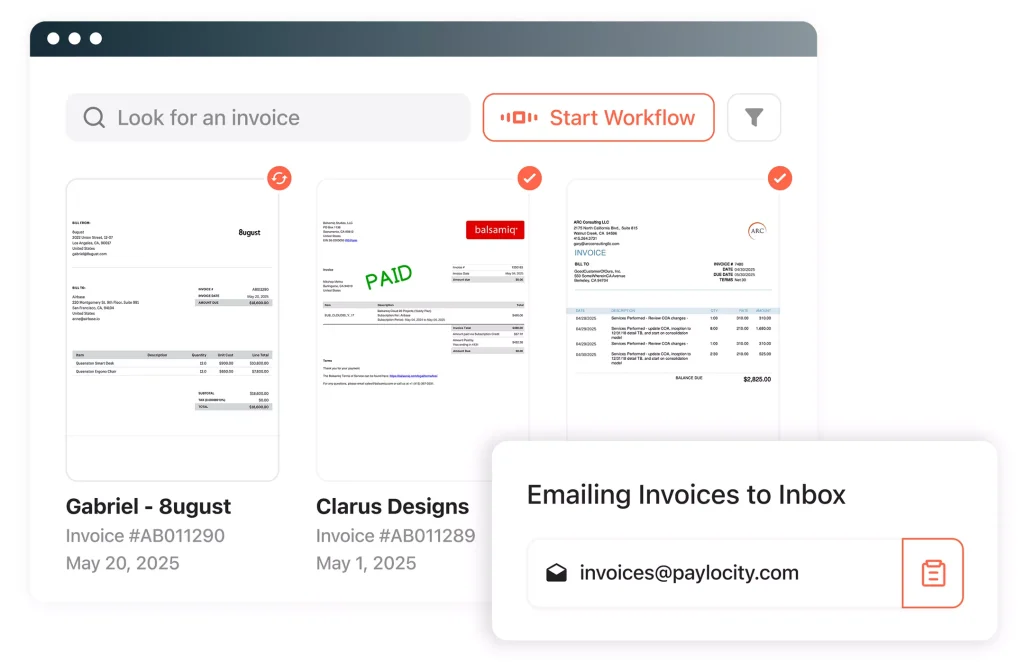
Airbase approaches business spend management from the control end rather than the capture end. Rather than tracking expenses after they’ve been incurred, Airbase enables finance teams to issue virtual cards with pre-set spending limits, merchant category restrictions, and budget allocations — meaning the categorization and authorization happen before the spend rather than after it.
An employee needing to purchase a software subscription gets a virtual card pre-loaded with the approved amount, locked to the vendor’s merchant category, and linked to the correct budget line. The expense is automatically categorized when the transaction occurs because the card configuration determines the category — there’s no post-hoc categorization step and no risk of miscategorization because the control is embedded in the payment instrument itself.
For finance teams managing a large volume of SaaS subscriptions, vendor payments, and departmental purchases, Airbase’s approach converts expense management from a review-and-correct workflow into a configure-and-approve one — shifting the control point from after the spend to before it.
SAP Concur — Enterprise Travel and Expense Policy Enforcement
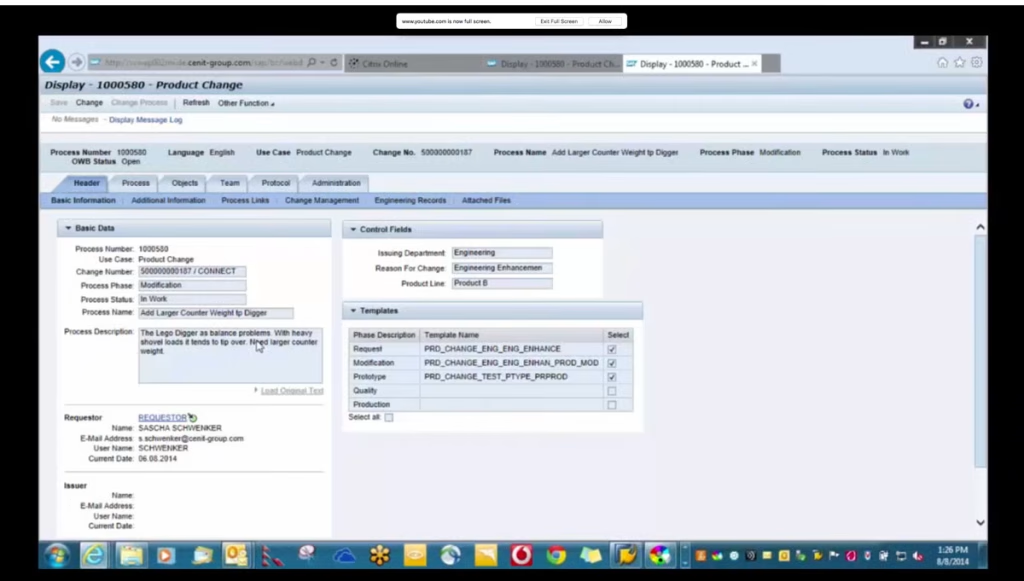
SAP Concur addresses the complexity of enterprise expense management at scale — specifically the challenge of enforcing consistent expense policies across large numbers of employees in multiple locations, with different per-diem rates, different approval hierarchies, and different tax treatment by jurisdiction.
Its policy engine compares every submitted expense against the applicable policy rules before routing for approval — flagging out-of-policy amounts, missing receipts, and category mismatches automatically rather than depending on approvers to catch policy violations manually. This automated policy check is what makes consistent categorization achievable across hundreds or thousands of monthly expense reports: the system enforces the standard rather than depending on human reviewers to apply it consistently.
Concur’s integration with leading ERP systems – SAP S/4HANA, Oracle, Workday – helps ensure expense data can flow straight into financial reporting systems without manual reconciliation, maintaining category integrity from point of capture through to management accounts.
Reviewing and Auditing Expense Data
Capturing and categorizing expenses correctly is the foundation. Using that data requires a regular review rhythm that converts the captured information into management insight.
Monthly variance analysis — comparing actual category spending against budget for the period — is the basic review cadence that identifies overspend patterns early enough to address them. Quarterly category audits, where a sample of expenses in each category are verified for appropriate categorization and documentation, maintain the quality of historical data and catch categorization drift before it becomes difficult to correct.
Year-end expense reviews should specifically verify that the management accounting categorizations align with the tax reporting categorizations — that what’s being reported as deductible business expenses in each category is supported by documentation and consistent with the applicable rules. This review, done before tax filing, is significantly less stressful than discovering misalignments during preparation.
For a broader look at the financial tracking practices that complement expense management, our guide on how to track income and expenses as a freelancer covers the income side of the financial picture and how the two disciplines work together to provide complete financial visibility.
Conclusion
Business expense tracking done well produces reliable financial data that supports decisions year-round, not just at tax time. The investment required — a consistent capture habit, a category structure aligned with how the business actually works, a policy that makes consistent categorization achievable, and a regular review rhythm — is modest relative to the operational and financial value of having expense data you can trust. The tools available today make the capture and categorization mechanics substantially easier than they were a decade ago. The remaining work is mostly process discipline and policy clarity.



Leave a Comment