Hey there. Are you struggling to manage a remote team?
I get it. A few years ago, I was pulling my hair out trying to run payroll for people in five different countries. It was an absolute nightmare.
I was spending more time dealing with compliance issues, chasing down signatures on blurry scanned documents, and panicking about local labor laws than actually growing my business. That is a terrible way to operate. You want to focus on revenue, product development, and marketing, not paperwork. But when your team is scattered across the globe, the old way of doing human resources simply stops working. It crashes and burns.
Here is the truth. The software you use to manage your people will make or break your company culture. It will determine how fast you can hire, how easily you can scale, and how happy your employees are.
If your current process involves chasing down Excel sheets, sending frantic Slack messages at midnight, and praying you did not mess up local tax codes, you need a massive change. You need a centralized platform designed specifically for untethered teams.
In this guide, I am going to show you exactly which platforms you should be using right now. No fluff. No corporate jargon. Just the practical tools that actually work and will save you hundreds of hours every single year.
Why the Old Rules of HR Do Not Apply Anymore
Think about how human resources used to work ten years ago. You had an office. People walked in on their first day, signed a stack of physical papers, handed them to a manager down the hall, and went to their desk. If they had a question about their paycheck, they literally knocked on a door.
Now? You might hire a backend developer in Brazil, a senior designer in Ukraine, and a brilliant copywriter in Texas on the exact same day. You have never met them in person. They all have different holidays, different labor laws, and different local currencies.
If you try to jam that new, highly complex reality into legacy software built for a single physical office building, things will break. You will end up with missing documents, incorrect paychecks, and incredibly frustrated employees.
Look at the data. The researchers at Gartner released a major report indicating that hybrid and remote knowledge workers are making up massive portions of the global workforce, fundamentally changing how organizations operate. You can check the numbers yourself at Gartner. The trend is extremely clear. Remote work is not a passing fad. It is the new baseline for acquiring top-tier talent.
If you are a business owner, a founder, or a manager, you have a simple choice to make. You can keep fighting the friction of your current setup, or you can upgrade your tech stack to match your ambitions.
Here is exactly what a modern platform needs to handle without breaking a sweat:
- Global payroll and compliance without requiring you to set up local legal entities.
- Self-serve onboarding flows that actually make new hires feel welcome and prepared.
- Clean time-off tracking that stops your support inbox from catching fire when three critical people take vacation at once.
- Benefits administration that works seamlessly across completely different jurisdictions.
Let us look at the specific platforms that actually deliver on these high-stakes promises.
Handling the Nightmare of Global Compliance
I want to tell you a quick story. Early in my career, I wanted to hire a brilliant software engineer who lived in Portugal. I thought I could just send her a wire transfer every month, call her an independent contractor, and call it a day.
My accountant almost had a heart attack when he found out.
Hiring across borders is a legal minefield. Misclassifying an employee as a contractor is one of the easiest ways to get hit with massive fines and legal penalties. The IRS is very strict about this distinction within the United States, and you can read their exact guidelines at IRS. Other countries have even stricter rules, mandatory 13th-month pay structures, and complex termination laws.
You do not want to be on the wrong side of a foreign tax authority. Trust me. It is expensive and exhausting.
This is exactly why Employer of Record services exist. They take on the massive legal liability for you. They hire the person on paper in that specific country, handle the complex local taxes, and process the mandatory local benefits. You just manage the employee’s day-to-day work output.
If you are building an international team, you absolutely need to look at Deel.

Deel is an absolute monster in this space, and I mean that in the best way possible. They make hiring in over 150 countries look incredibly easy. You log into their dashboard, generate a localized contract that is 100 percent compliant with the laws of your new hire’s country, and send it over. They sign it digitally. Deel handles the rest. Your new hire gets paid in their local currency, and you simply pay one consolidated invoice in USD every month. It completely removes the legal anxiety from global hiring and lets you access the best talent on earth.
If you want another fantastic option for global teams that is highly regarded, check out Multiplier.
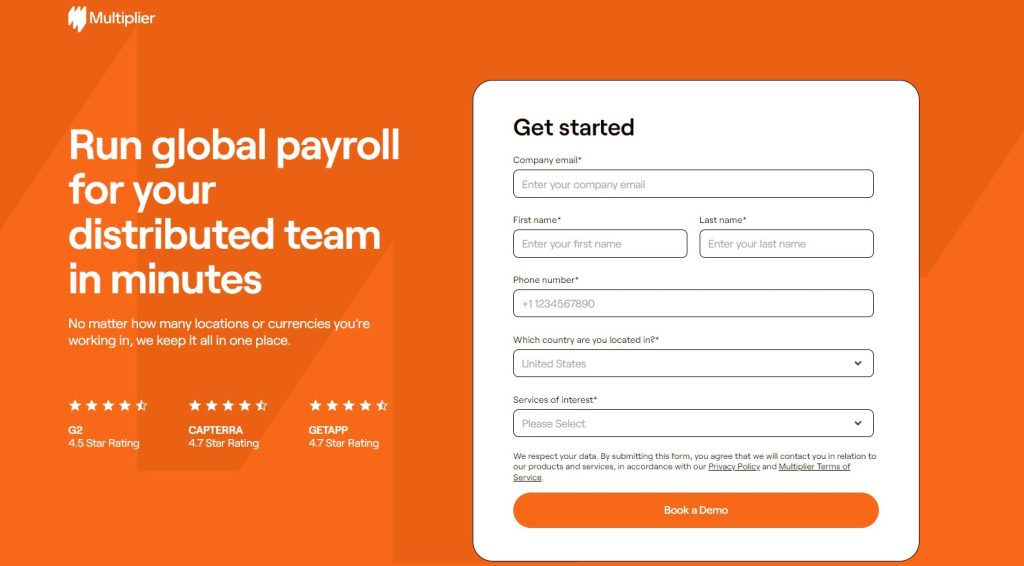
Multiplier is excellent for companies that want a very clean, straightforward interface for managing international payroll, benefits, and expenses all in one place. They are particularly strong in the Asian and European markets. Think about the alternative for a second. Instead of spending 50,000 dollars and six months trying to open a subsidiary in India just to hire three top-tier developers, you can use Multiplier and have them legally onboarded and working in days. It is a massive competitive advantage when you are fighting your competitors for top talent.
Keeping the Day-to-Day Operations Organized
Okay, so you have handled the international hiring compliance. What about the people in your home country? What about the daily administrative grind of approvals, performance reviews, document storage, and basic employee data?
You need a core system of record. A single source of truth for your entire organization.
When a manager needs to know if their lead salesperson is taking next Friday off, they should not have to dig through messy Slack channels or read old emails. When an employee wants to check their latest pay stub, they should not have to email the finance department and wait two days for a reply.
You want a system that gives your team autonomy and gets administration out of their way.
A great place to start your search is BambooHR.
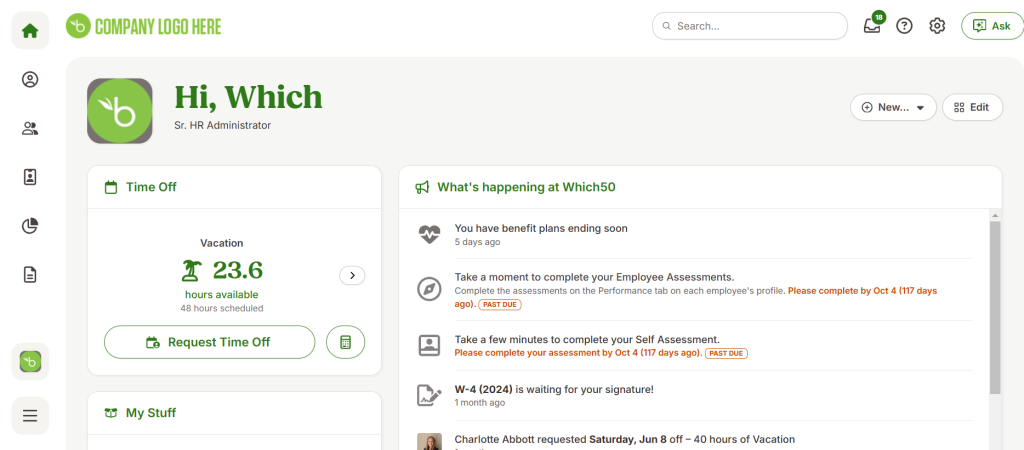
BambooHR has been around for a while, and there is a very good reason for that longevity. It is highly intuitive. It is built for small to medium businesses that need to get organized fast without a six-month implementation period. The onboarding flows in BambooHR are fantastic. You can set up automated checklists so that when a new hire signs their offer letter, an automatic email goes to IT to provision their laptop, and another email goes to their direct manager with a customized 30-day training plan. It stops important tasks from falling through the cracks when everyone is working from their own living rooms.
But what if your company is growing incredibly fast and you need something much more robust? What if you want to tie your human resources data directly into your IT provisioning, app access, and corporate cards?
That is exactly where you want to look at Rippling.
Rippling takes a totally different, highly automated approach. They treat employee data as the central hub for your entire company’s operations. When you hire someone in Rippling, the system does not just add them to a payroll list. It can automatically create their Google Workspace account, add them to the right Slack channels based on their department, and even issue them a virtual corporate expense card with a preset limit. And when someone leaves the company? One single click shuts down all their system access everywhere. For remote teams where data security is a huge concern, this capability is absolutely vital.
The Financial Side: Payroll and Benefits That Do Not Break
Let us be completely real with each other for a second. If you mess up an employee’s paycheck, you lose their trust instantly. You can have the best company culture in the world, the coolest virtual happy hours, and the most exciting product roadmap, but if rent is due and your payroll software crashed, your team will start looking for other jobs immediately.
Payroll has to be boring. It has to be perfectly predictable.
If you are running a heavily US-based remote team or a hybrid team with mostly domestic employees, I highly recommend checking out Gusto.
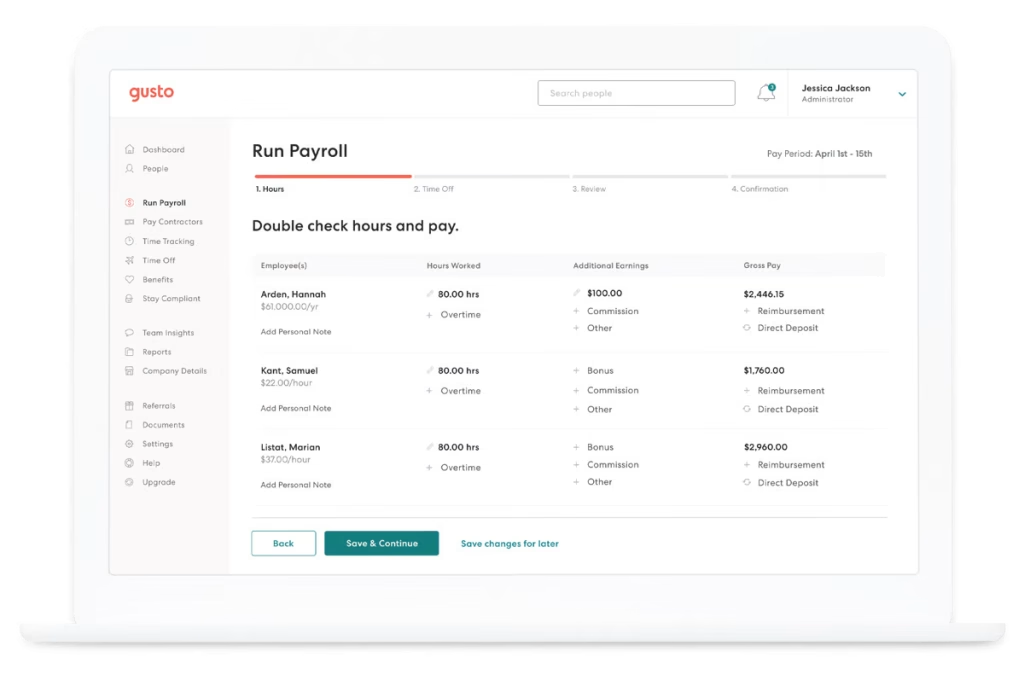
Gusto is beloved by small businesses because it completely abstracts away the terrifying complexity of payroll taxes. It automatically calculates the deductions, files the local, state, and federal taxes on your behalf, and handles W-2s and 1099s at the end of the year without you having to lift a finger. They also have an incredibly user-friendly interface for administering health insurance, vision, dental, and 401(k) plans. When a remote worker needs to choose their health plan during open enrollment, Gusto walks them through it with clean, simple language instead of confusing insurance jargon.
But what if your operational needs are a bit more complex? Or what if you have a big mix of hourly, salaried, part-time, contractors, and shift workers all over the place?
You might want to strongly consider Factorial.
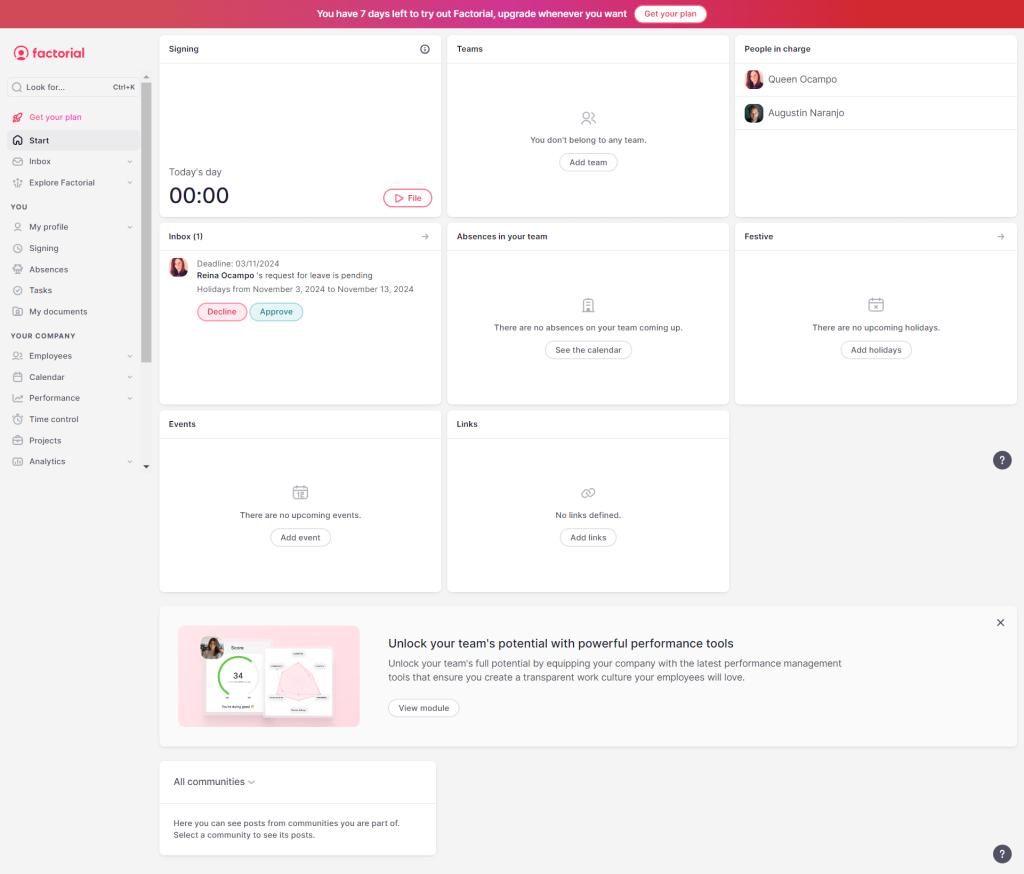
Factorial is fantastic for centralizing not just standard payroll data, but granular time tracking, absence management, and complex shift scheduling. If you are running a remote customer support team that operates in overlapping shifts to cover 24/7 global support, Factorial helps you track those exact hours, approve them efficiently, and push them directly to payroll. It entirely eliminates that terrible Friday afternoon ritual where managers try to reconcile three different time-tracking spreadsheets before the banks close for the weekend.
The Hidden Costs of Bad Software
I want to pause here and address a common objection. I hear founders say all the time, “Neil, these platforms are expensive. I can just do this myself with spreadsheets and free tools.”
That is a trap.
When you use messy, fragmented systems, you are paying a hidden tax every single day. You are paying in lost productivity when your HR manager spends three hours fixing a broken spreadsheet formula instead of recruiting better talent. You are paying in employee churn when your top performers get frustrated with your broken onboarding process and leave after 90 days. You are paying in sheer anxiety every time tax season rolls around.
Investing in the right platform is not a cost. It is an investment in your company’s operational velocity. When the administrative foundation is rock solid, your team moves faster. It really is that simple.
How to Choose the Right Tool for Your Business
You are probably looking at this extensive list of options and wondering exactly where to start. Do not just blindly buy the most expensive tool on the market and hope it magically fixes your operational problems. That never works out well.
Here is exactly what you should do next to make the right choice.
Step 1: Audit your current friction points. Take out a piece of paper right now. Write down the top three administrative things that cause you the most pain and take up the most time every single month. Is it international compliance? Is it tracking paid time off? Is it chaotic onboarding? Identify your biggest bottleneck first.
Step 2: Consolidate where possible. You do not want a separate app for time tracking, a completely different app for payroll, and yet another app for performance reviews. That causes app fatigue. Look for comprehensive platforms that handle multiple core functions well to keep your tech stack clean.
Step 3: Test the actual employee experience. Before you sign a massive annual contract, look at the platform strictly from the employee’s perspective. Request a demo and test the mobile app. Is it actually intuitive? Can they find their tax documents easily? If the system is hard for them to navigate, they simply will not use it. They will just email you or your HR manager instead, which completely defeats the entire purpose of buying the software in the first place.
Step 4: Talk to your accountant or finance lead. Never implement a massive new financial or payroll system without getting direct buy-in from the person who actually files your corporate taxes. Make sure the software you choose integrates cleanly with your primary accounting platform like QuickBooks or Xero.
The Bottom Line
Managing a remote team is an incredible, unfair advantage. It allows you to hire the smartest, most capable people on earth, regardless of where they happen to live. It significantly lowers your physical overhead costs. It forces you to build better, more resilient operational habits.
But you cannot run a modern global team on outdated local software.
You need digital systems that are purpose-built for the unique reality of asynchronous work. You need automated tools that protect you legally, pay your people reliably, and give everyone a crystal clear understanding of what they need to do.
The platforms we just discussed will do exactly that for your business. Pick the one that fits your most urgent need, roll it out carefully to your team, and watch how much smoother your entire business runs. When you remove the heavy administrative friction, you give your team the time, space, and energy to do the actual high-leverage work you hired them to do.
That is how you win in today’s market. That is how you scale a profitable company.
Now, go fix your HR stack. You will be absolutely amazed at the difference it makes in your daily life.


Leave a Comment