The appeal of a proxy server is straightforward: route your internet traffic through an intermediary, and whoever is watching at the other end sees the proxy’s address rather than yours. That basic premise has made proxies a standard tool for privacy-conscious individuals, businesses running automated data collection, security researchers, and organizations managing how employees access the internet.
What often gets skipped in the conversation about proxies is the part that complicates that simple picture. A proxy that genuinely protects your privacy requires more than just masking an IP address. The provider’s logging practices, the protocol used, the proxy type, and the security of the connection itself all determine whether the arrangement actually delivers on its implied promise — or whether it introduces new risks while appearing to mitigate old ones.
Understanding the real security and privacy landscape around proxy usage is increasingly relevant. As regulatory scrutiny of data practices has tightened globally and the number of proxy providers in the market has expanded dramatically, the gap between a well-configured privacy-preserving proxy and an unvetted one that commoditizes your traffic has never been wider.
What a Proxy Actually Does to Your Traffic
Before evaluating security and privacy implications, it helps to be clear about what a proxy does and doesn’t protect.
A proxy server sits between your device and the destination server. Your request goes to the proxy first; the proxy forwards it on your behalf; the response comes back through the proxy to you. From the perspective of the destination server, all requests are originating from the proxy’s IP address. Your actual IP is not exposed to the destination directly.
What this masks, specifically, is your IP address and geographic location from the destination server. What it does not mask, in most standard proxy configurations, is your traffic from the proxy provider itself. The provider sees everything passing through their infrastructure — which sites you’re visiting, what data you’re sending and receiving, and when. Whether that information is logged, stored, analyzed, or sold is entirely a matter of the provider’s policies and practices.
This is why the proxy provider’s trustworthiness is not a secondary consideration. It is the central one. Routing traffic through an untrustworthy proxy doesn’t add a privacy layer — it replaces one observer with another while creating the impression of protection.
The Logging Problem
Logging policies are the single most important privacy variable in any proxy arrangement, and they’re also the least standardized area of the industry.
A provider with a genuine no-logs policy collects no record of which IP addresses connected, which destinations were accessed, the volume of data transferred, or the timestamps of sessions. In practice, verifying whether a provider actually adheres to this claim is difficult. Independent audits by reputable security firms provide meaningful evidence; marketing copy does not.
Beyond access logs, there are connection logs — records of when a user authenticated to the service without necessarily capturing what they did afterward. Many providers who describe themselves as no-log services retain connection metadata without retaining browsing activity. Whether that distinction matters depends on the threat model of the user. For someone concerned primarily about advertisers and website tracking, connection metadata is largely irrelevant. For someone with a more serious privacy requirement, the distinction is significant.
Jurisdictional considerations layer on top of logging policy. A provider operating under a legal framework that compels data disclosure upon government request creates a meaningful risk even if their internal logging practices are clean. Where a company is incorporated, where its servers physically sit, and what data-sharing arrangements exist between those jurisdictions all affect what legal mechanisms can reach the provider’s infrastructure.
Protocol and Encryption: The Technical Layer
Not all proxies encrypt traffic between your device and the proxy server itself. This is a distinction with significant security implications that many users don’t account for.
HTTP proxies, which are among the most commonly encountered, operate at the application layer and typically do not encrypt the connection between client and proxy. They forward plain HTTP traffic transparently. An adversary monitoring the network between your device and the proxy server — on a shared WiFi network, for example — can observe the content of unencrypted requests passing through. For HTTPS destinations, the content of the encrypted tunnel between your device and the destination remains protected, but the proxy itself can still observe metadata about which destinations you’re connecting to.
HTTPS proxies establish an encrypted tunnel between client and proxy, which removes the eavesdropping risk on that leg of the journey. SOCKS5 proxies operate at a lower level, handling traffic more generically without protocol-specific inspection, and can be used with encryption layered on top. For users with genuine security requirements, understanding which protocol their proxy operates on — and what encryption protects the client-to-proxy connection — is foundational.
Residential vs Datacenter Proxies: Different Risk Profiles
The proxy market has two primary infrastructure types with meaningfully different privacy and security profiles.
Datacenter proxies originate from commercial server infrastructure. They’re fast, relatively inexpensive, and widely available. From a security standpoint, they’re straightforward: the provider operates the servers, controls the network, and is responsible for the security of that infrastructure. From a privacy standpoint, datacenter IP addresses are more likely to be identified as proxy traffic by sophisticated destination servers, which can result in access restrictions or blocks.
Residential proxies route traffic through IP addresses assigned to real residential internet connections — typically devices enrolled in a provider’s network, often in exchange for service credits or as part of a peer-to-peer network arrangement. The privacy implication here is layered. From the destination server’s perspective, traffic appears to originate from a genuine residential internet user, making it far less likely to be flagged as proxy traffic. But the mechanism by which those residential IPs are sourced introduces its own considerations.
Bright Data operates one of the largest commercial residential proxy networks with explicit consent-based enrollment — network participants knowingly opt in. The company is also subject to EU data protection regulation and publishes detailed compliance documentation. When considering enterprise use cases that involve large scale data collection, the distinction between providers that source residential IPs through explicit consent, and those that do not, is ethically and legally significant for exposure.
VPNs Versus Proxies: Understanding the Practical Difference
The most common comparison is between a VPN and a proxy and is usually phrased in terms of one being more secure than the other. The reality is more nuanced.
A VPN encrypts all traffic between your device and the VPN server at the OS level, meaning all applications running on your device are protected at once. Depending on the configuration, a proxy may only be able to intercept traffic from a specific app or instance of a browser. A VPN provides more out-of-the-box coverage for complete device-level privacy.

Independent firms PricewaterhouseCoopers and Cure53 have audited ExpressVPN’s no-logs claims and security architecture. This gives you a much higher level of assurance than a self-reported policy.. It uses AES-256 encryption across all traffic, and its Lightway protocol balances speed with strong cryptographic protection. For individuals who want device-wide privacy protection with verified logging practices, a well-audited VPN with proxy-compatible features covers the majority of personal use cases more completely than a standalone proxy.
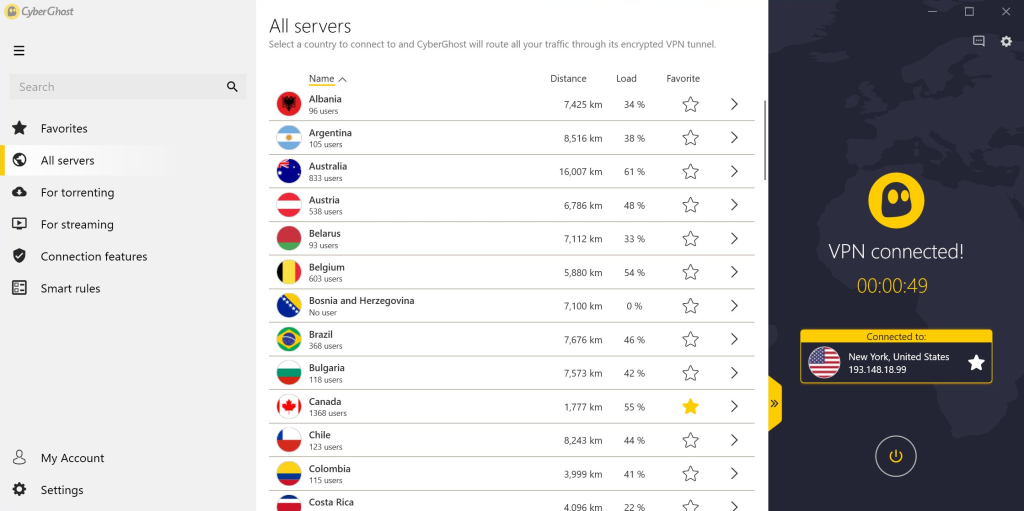
CyberGhost VPN publishes quarterly transparency reports detailing legal requests received from governments and law enforcement, and how those requests were handled. In an industry where transparency is often limited to marketing assertions, that level of ongoing public disclosure is a meaningful differentiator. Their NoSpy server infrastructure — physically located in Romania and operated exclusively by CyberGhost employees — removes third-party data center operators from the trust chain, which is relevant for users particularly concerned about infrastructure-level access.
Free Proxies: The Risk That Doesn’t Always Announce Itself
Free proxy services deserve direct attention because they remain widely used despite representing a well-documented security risk.
The economics of operating proxy infrastructure are not trivial. Servers, bandwidth, maintenance, and customer support cost real money. A service that provides these at no monetary cost to the user is monetizing something else — typically the user’s traffic data. Free proxies frequently inject tracking cookies, harvest browsing history for advertising networks, and in some documented cases have been used to inject malicious advertising or intercept credentials from unencrypted connections.
Academic and security research has repeatedly documented malicious or deceptive behavior in free proxy services. A 2015 analysis by security researcher Christian Haschek examined more than 400 free proxy services and found that a significant proportion either actively modified traffic or stripped security headers from responses — behaviors that directly undermine the privacy premise users assume when selecting a proxy.
For any use case involving sensitive data — authenticated sessions, professional work, financial services — free proxies should be excluded from consideration entirely.
What Good Proxy Security Practice Actually Looks Like
For organizations using proxies for legitimate operational purposes — data collection, security research, geographic access testing — the operational security considerations extend beyond the provider selection.
Rotating proxy pools limit the exposure of any single exit IP, which reduces the value of a compromised endpoint to a potential observer. Credential management for proxy authentication should follow the same standards as any other sensitive credential: unique credentials per deployment, rotation on a defined schedule, and storage in a proper secrets management system rather than hardcoded into scripts or configuration files.
Audit logging of proxy usage within an organization’s own infrastructure — separate from whatever the provider logs — provides visibility into how the proxy resource is being used and by whom, which matters for compliance purposes and incident response.
Our overview of proxy reliability and uptime statistics covers the performance and availability dimensions in more detail — a useful companion to the security and privacy evaluation covered here, since the operational utility of any proxy provider depends on both dimensions together.
Conclusion
Proxies are a legitimate and useful tool when deployed with a clear understanding of what they actually protect and where their limitations lie. The provider’s logging practices, the protocol securing the client-to-proxy connection, the sourcing of the proxy pool, and the jurisdictional exposure of the provider’s infrastructure collectively determine whether a proxy arrangement adds meaningful privacy or simply relocates the point of observation. Evaluate providers with the same scrutiny you would apply to any other service that handles sensitive network traffic — because that is precisely what they are doing.



Leave a Comment