You ever try to get help from a company and feel like you are just screaming into a void? We have all been there. You buy a piece of software, or a pair of headphones, or maybe you just signed up for a new streaming service. Everything is great until it suddenly is not. You click the support button, and you are immediately thrown into a labyrinth of automated menus and empty promises.
If you are running a business, you might think your customer service is doing just fine. But the data tells a vastly different story. Customer satisfaction is not just a fuzzy metric to make your team feel good about themselves. It is the literal lifeblood of your retention strategy. People will absolutely abandon your brand if you make it too hard for them to get a simple answer. In fact, poor customer experiences put an estimated 3.7 trillion USD of global sales at risk right now. That is a lot of money left on the table simply because someone could not figure out how to reset a password.
So, how do people actually want to talk to you? It turns out that preference heavily depends on the channel and the urgency of the problem. If you look closely at recent customer satisfaction statistics by support channel, you will start to see some fascinating patterns about human behavior and patience levels.
Think of customer support channels like ordering food when you are absolutely starving. Self-service is like grabbing a granola bar from your own pantry. It is quick, it gets the job done, and it requires zero human contact. Email is like putting a frozen pizza in the oven. You know you are going to eat eventually, but the waiting period is excruciating. Live chat is the fast-food drive-thru. It is highly efficient, though there is always a decent chance they forget your extra ketchup. And phone support? That is sitting down at a packed, chaotic restaurant. You might get treated like absolute royalty by a great server, or you might sit in a booth for forty-five minutes completely ignored.
Let us break down exactly how your customers feel about these different channels, and why some methods create loyal fans while others just create angry Twitter rants.
Live Chat and Messaging: The Fast-Food Drive-Thru
Texting is basically the default mode of human communication now, so it makes total sense that messaging and live chat are dominating the customer service space. Recent data shows that live chat carries a massive portion of all support interactions, with some reports putting preference for messaging as high as 61 percent among consumers.
Why do we love it so much? Because we can multitask. Nobody wants to pause their entire life to dispute a weird billing charge. Live chat allows a customer to complain to your company while they are simultaneously watching Netflix, eating lunch, and pretending to work on a spreadsheet. Due to the immediacy of it, 79 percent of customers prefer live chat to other channels. When it is run properly by humans, live chat boasts a deeply impressive customer satisfaction rating of around 85 percent.
But there is a massive catch here, and his name is AI.
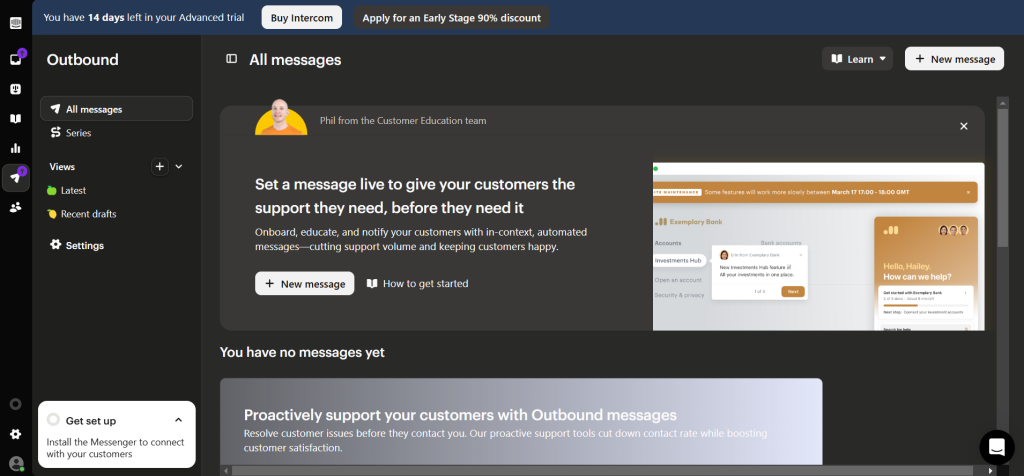
Businesses love chatbots because they are cheap. Customers hate poorly configured chatbots because they are utterly useless. While a human agent typing back to you feels highly efficient, getting stuck in a loop with a bot that keeps saying “I did not quite catch that” is infuriating. Around 68 percent of consumers report having a bad chatbot experience in the past year alone. If you are going to use an automation platform like Intercom to handle the initial wave of customer requests, you have to ensure there is an immediate escape hatch to a real human being. If a customer has to type “speak to a human” four times in all caps, their satisfaction score is already plummeting before your agent even says hello.
The Phone: Not Dead, Just Highly Escalated
There is a running joke that younger generations are terrified of making phone calls. The narrative says that Millennials and Gen Z would rather throw their smartphone into a river than use it to actually speak to another human being.
The statistics actually tell a much more nuanced story. Yes, 50 percent of consumers over the age of 55 still prefer the phone as their primary channel for just about everything. But when things go critically wrong, everybody picks up the phone. A fascinating finding shows that while only 30 percent of Gen Z will call for a routine issue, a whopping 71 percent will reach for the phone when they have a complex problem that cannot be fixed online.
When the stakes are high, we want a voice. If your software deletes a week of a client’s work, or if a shipment of critical supplies is lost in transit, nobody wants to wait 24 hours for an email reply. They want a voice on the line telling them it will be okay.
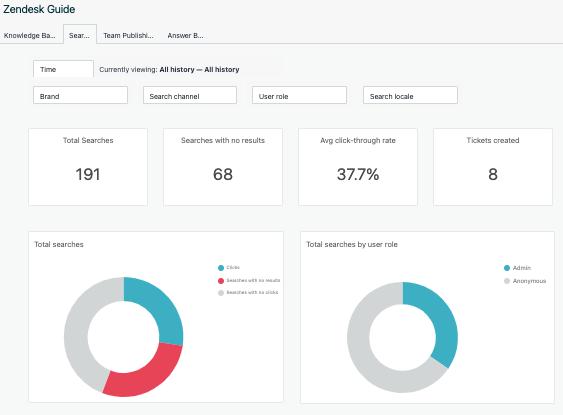
The irony of phone support is that it often has the lowest baseline satisfaction scores of any channel, sometimes hovering in the mid-forties. But this is not because the phone is a bad channel. It is because the phone is the channel of last resort. Customers reach for the phone when the problem is hard, and they are usually already frustrated by the time the agent answers. If your team is stuck using outdated tech to manage these calls, the friction only gets worse. Modern teams using robust systems like Zendesk can pull up customer histories instantly, which is vital because there is nothing more rage-inducing than having to spell your last name and repeat your account number three different times to three different departments.
Email: The Paper Trail of Despair
Email is the frozen pizza of customer support. We use it all the time, but nobody is particularly thrilled about it. Almost 98 percent of customers use email, making it the most universally adopted communication method on the planet. We use it because we want receipts. We want a written record of our complaint, exactly when we sent it, and exactly what the company promised to do about it.
However, the satisfaction statistics regarding email support are frankly embarrassing for the corporate world. According to Shopify’s compilation of customer service statistics, a staggering 62 percent of companies simply do not respond to customer service emails. They just let them vanish into the void. And for the companies that do bother to reply, the average response time is 12 hours.
Imagine walking up to a store clerk, asking a question, and them staring blankly at you for 12 hours before answering. That is what bad email support feels like.
Customers rank email high for convenience but low for speed. If you are going to offer email support, you cannot treat it like a suggestion box that you check once a week. You need a dedicated platform like Zoho desk to route tickets effectively, set firm service level agreements, and ensure that nothing falls through the cracks. If a customer writes to you about a broken product, they are already annoyed. If you make them wait three days for a generic template response, you have lost a customer for life.
Self-Service: The Silent Majority
Let us talk about the pantry granola bar. The absolute best customer service interaction is the one that never actually has to happen.
If I am trying to figure out how to update my billing address, I do not want to call you. I do not want to chat with you. I just want to read a quick article, click three buttons, and move on with my Tuesday. Over 69 percent of customers prefer to solve issues on their own, and 68 percent of millennials prefer self-service for general issues.
Building a great self-service knowledge base is the most underutilized cheat code in modern business. Customers expect you to have a portal where they can find answers instantly. When they find the answer, their satisfaction is incredibly high because you respected their time. When they search your FAQ and find outdated articles or broken links, their frustration boils over immediately.
If you want to keep your users happy, you need to treat your help center as a core product feature. Keep it updated. Make the search bar actually work. A brilliant knowledge base deflects thousands of basic tickets away from your human agents, freeing them up to handle the complex, angry phone calls we talked about earlier. If you are looking to understand how this ties into long-term loyalty, you might want to check out this guide on customer retention strategies which explains why respecting a buyer’s time is the ultimate growth hack.
The Real Secret is Omnichannel Continuity
Here is the truth that ties all these statistics together. The specific channel does not matter nearly as much as the continuity between them.
Customers do not think in terms of “channels.” They do not say, “I am now engaging in an email interaction.” They just think, “I am talking to this brand.” If I start a conversation with a chatbot, get escalated to a live agent, and then have to call your phone support the next day, I expect the person on the phone to know exactly what I already typed in the chat.
According to Qualtrics XM Institute research, a massive 74 percent of consumers find it incredibly frustrating to repeat their story to different agents. Disconnected support stacks yield a miserable customer satisfaction score of around 28 percent. Meanwhile, businesses that maintain context across all channels boast satisfaction scores closer to 67 percent. That is a nearly 40-point swing based entirely on whether your software systems actually talk to each other.
If you treat each support channel as a totally isolated island, you are going to bleed customers. You have to connect the drive-thru, the restaurant, and the pantry. If you can provide a smooth experience where a customer can email you on Monday, text you on Tuesday, and call you on Wednesday without ever having to re-explain their problem, you will not just satisfy them. You will earn their business for the next decade.
Ultimately, the statistics are just a reflection of basic human empathy. Respect their time, remember their history, and give them an easy way out when the automation breaks. Do that, and your metrics will take care of themselves.


Leave a Comment