
Let’s be real: nobody drops their nine-to-five and dives into freelancing just for the “flexibility.” Sure, working in sweatpants is great, but we are here to get paid. The dream is simple: make good money on your own terms. And if you look at the numbers, you are not alone. The Freelancers Union has been tracking this for years, showing that millions of people are leaving traditional jobs behind to build their own paths.
Take a look at what the World Bank is tracking right now. They talk a lot about how digital shifts and AI are unlocking global opportunities. Suddenly, a designer in one corner of the map can work for a founder in another, without skipping a beat.
But look, let’s not paint too rosy a picture. The platform you pick determines whether you are bidding against fifty people for a ten-dollar logo or signing a high-paying retainer. So, which of these sites actually treats your wallet right? Let’s break down the big options and see where the real money is.
The Major Platforms Compared
The answer is not as simple as picking the most popular site. Each platform works differently. Some focus on high-end clients. Others prioritize quick gigs. Some charge high commissions but offer better projects.
If you are planning to start freelancing or thinking about switching platforms, understanding how each one works can make a huge difference to your income.
Let’s break down the platforms that freelancers commonly use and see which ones tend to pay the most.
Toptal
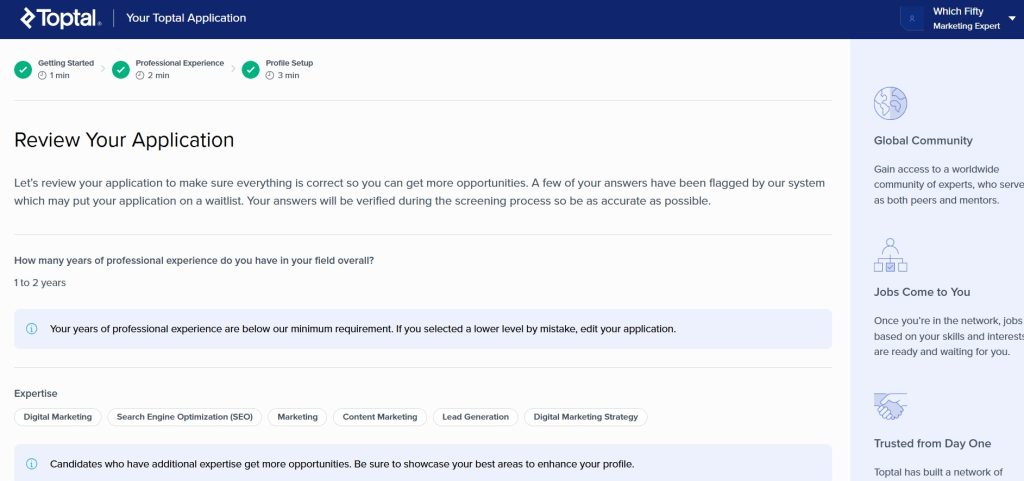
If you want to skip the race to the bottom, Toptal is often called the holy grail. But there is a massive gatekeeper: they only accept the top three percent of applicants. The vetting process is brutal, involving language tests, live coding or design tests, and a dummy project before you see any client.
If you make it through, the reward is worth it. You get paired directly with enterprise clients and startups who come here because they do not want to sort through low-quality proposals.
Rates are premium. Developers, designers, and finance pros charge between 60 USD and 150 USD per hour. Since their system matches you directly with projects, you do not have to bid against others on price. It is easily the highest-paying platform on average, if you can pass the screening.
Upwork
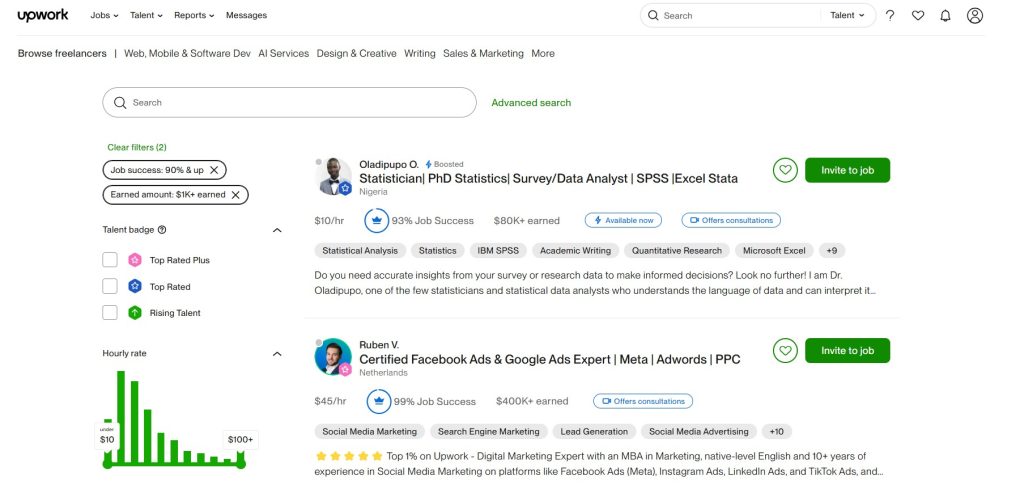
Then you have Upwork, the undisputed giant of the general freelance market. Almost anyone can sign up, meaning you are competing with a massive pool of talent.
Earnings run the gamut, from entry-level gigs at 10 USD per hour to senior consultants billing 120 USD per hour. You buy “Connects” and pitch for open jobs. Starting out is honestly a slog; you will spend a lot of time pitching for low-paying jobs just to get some traction. But once you stack up positive reviews and push your job success score into the nineties, better clients start reaching out directly.
Since a lot of work is billed by the hour, you must track your time meticulously. Nobody wants to argue with a client about how long a task took. It’s why so many people run time-trackers like Clockify in the background. It records the actual hours, handles different client projects, and keeps the invoices completely transparent so you get paid for every minute worked.
Fiverr
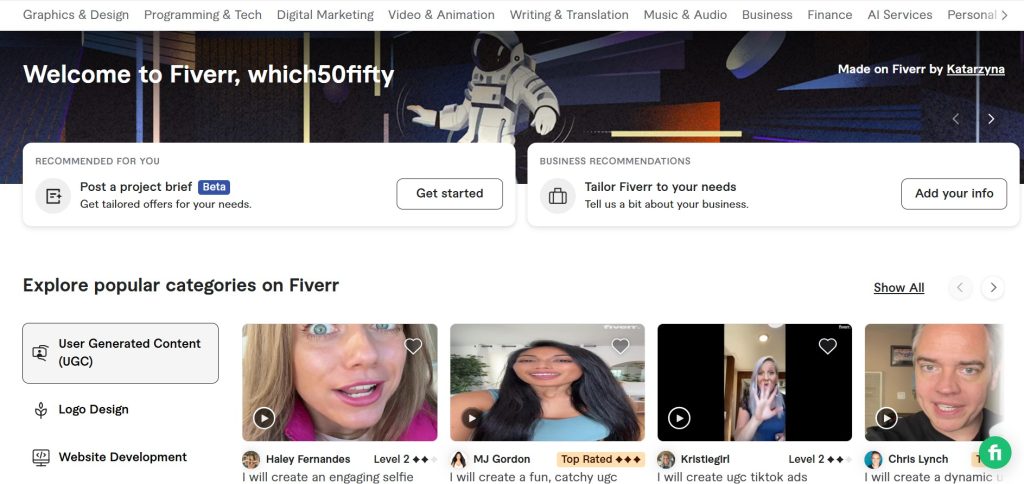
For years, Fiverr was looked down on as a place for cheap, five-dollar gigs. That is ancient history. Today, it operates as a powerful marketplace where you package and sell services for thousands of USD.
Instead of bidding, you publish specific offers—say, designing a landing page or editing a podcast—and clients purchase them straight off your page. Offering three packages (Basic, Standard, and Premium) makes it easy for clients to self-select and buy the more expensive options.
This approach is perfect for tech setups. For instance, web developers package their services by pointing to their mastery of the official WordPress Documentation. They package a complete installation and theme setup as a single flat-rate purchase, dodging the time-consuming back-and-forth of custom bidding.
PeoplePerHour
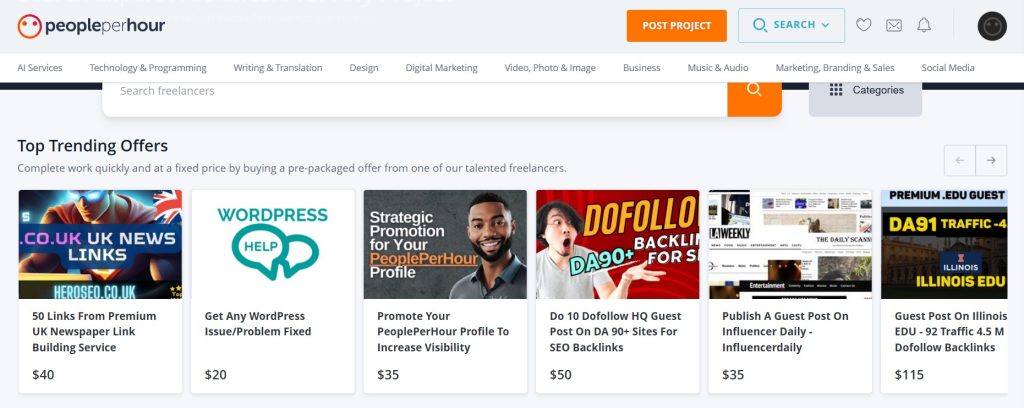
Next is PeoplePerHour, a UK-based platform blending the bidding style of Upwork with the packaged gigs of Fiverr. It is smaller than the others, meaning less competition.
They use a ranking system called the “CERT” score. The higher your score, the more visible your profile is. If you are a writer, designer, or marketer looking to connect with European or UK clients, it’s a solid place to set up shop.
The bidding works similarly to Upwork, but you also get to create “Offers”—pre-packaged gigs you sell directly. While it lacks the massive volume of the giant marketplaces, the rates are generally solid, making it a great secondary platform.
How freelancers increase their earnings over time
Landing your first client is great, but how do you scale your income to a comfortable full-time salary? You cannot just rely on search traffic forever.
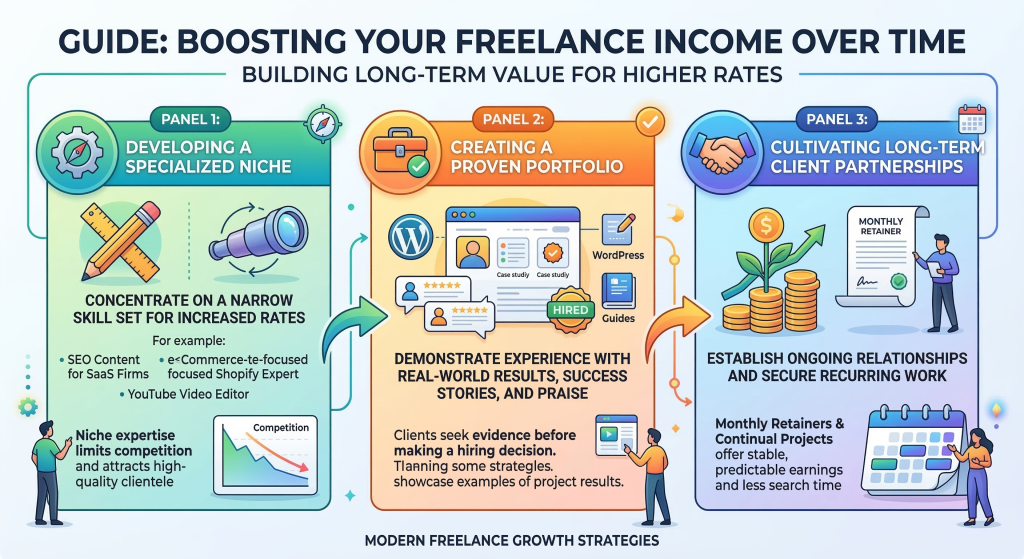
Here is how you actually increase your rates over time:
- Collect Testimonials Constantly: Think of reviews as your best sales tool. As soon as you wrap up a project for a happy client, ask them to write a quick recommendation. Having actual proof of your good work on your profile makes it simple to charge the next client a higher rate.
- Specialize in a Niche: Generalists are a dime a dozen. If you write “web content,” you are competing with everyone. If you write “email copy for Shopify stores,” you are a specialist. Specialists charge double or triple because they solve specific, high-value problems.
- Move to Value Pricing: When you bill hourly, you are penalized for being fast. Shift to value-based flat pricing. Charge for the value of the end result. A sales page that brings in 20,000 USD of business is worth 2,000 USD to a client, even if it only takes you four hours to write.
- Find Recurring Retainer Deals: Jumping from client to client will wear you out fast. The real goal is taking a one-off job and pitching a monthly agreement. You could offer to write four newsletters a month, do website maintenance, or handle their social media graphics. This gives you predictable pay and lets you stop spending half your week applying for new gigs.
Wrap Up
So, which one wins the crown for the best pay?
- If you can pass the vetting process and work in tech or finance, Toptal is the clear winner.
- If you want a steady stream of long-term projects and do not mind bidding, Upwork is a solid bet (just track your time with Clockify).
- If you want to package your work and let clients come to you, Fiverr is perfect for scaling.
- If you want a smaller, Europe-focused market, PeoplePerHour is a strong option.
Choose the one that matches your style, specialize early, and stop selling your time by the hour.


Leave a Comment